Rossill Bridge Cottage
The Brief
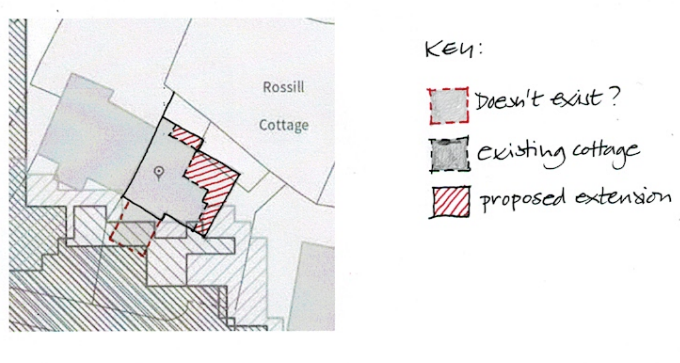
RIDA Reports was appointed to undertake a detailed flood risk assessment for a proposed residential development at Rossill Bridge Cottage, Selside, Kendal, LA8 9EW. The project involves the construction of an extension on the property’s existing garden area.
Why the Client Chose RIDA
The client required specialist flood risk expertise to support their planning application for a residential extension located near a main river. RIDA was selected to deliver a comprehensive assessment to ensure the proposed development would safely manage on-site water risks and fully comply with the requirements of the National Planning Policy Framework (NPPF) and local planning authorities.
The Challenge
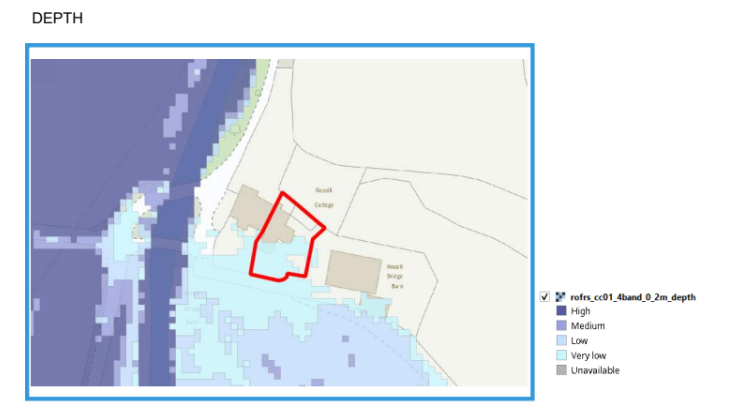
The primary challenge for the development was its location within Environment Agency Flood Zone 3, indicating a high probability of fluvial flooding from the nearby River Mint. Additionally, the site was identified as having a high risk of groundwater flooding. A significant site-specific constraint was that raising the finished floor level to the recommended 136.00m AOD (0.6m above the design flood level of 135.40m AOD) was unachievable due to access limitations and the necessity to match the existing building’s floor level of 135.30m AOD.
The RIDA Difference
To address the high fluvial flood risk and the finished floor level constraints, RIDA developed a robust ‘water exclusion strategy’. This mandated the use of low-permeability building materials, such as engineering bricks and sealed concrete foundation blocks, for all new construction up to 136.00m AOD. RIDA also specified that all new services, electrics, and fittings be elevated above this level, with closed-cell insulation used for pipework and fully sealed service entries.
To directly mitigate the high risk of groundwater flooding, RIDA specified the installation of a tanking membrane up to 300mm above external ground levels and the use of fully sealed concrete floor slabs. Furthermore, recognizing the site’s freely draining topsoil, RIDA outlined a Sustainable Drainage Systems (SuDS) approach to manage surface water safely without increasing off-site flood risk.
The Outcome
The detailed flood risk assessment successfully demonstrated that the proposed extension could be undertaken in full compliance with the NPPF and Environment Agency guidelines. By committing to the specified water exclusion measures, groundwater tanking, and a formal Flood Warning and Emergency Response Plan with a clear evacuation route to the north, RIDA showed that the development would remain safe for its operational lifetime without increasing flood risk elsewhere, providing robust technical evidence for the planning submission.