
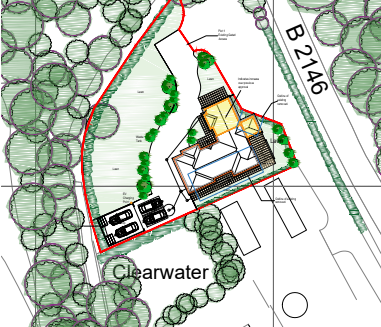
Clearwater, Ratham Lane, West Ashling
The Brief
RIDA Reports was commissioned to undertake a detailed flood risk assessment for a proposed residential redevelopment at 1 Clearwater, located on Ratham Lane in West Ashling. The project entails the demolition of an existing bungalow to be replaced with a newly constructed bungalow, covering a total development area of approximately 1,250 square metres. As a ‘More Vulnerable’ residential dwelling with an estimated lifetime of 50 to 100 years, a comprehensive evaluation was necessary to ensure the long-term safety and sustainability of the new home.
Why the Client Chose RIDA
With the site boundary partially situated within a high-risk flood zone, the client required specialist flood risk and drainage expertise to provide robust technical support for their planning application. They chose RIDA to effectively navigate stringent national and local planning policies, trusting our ability to deliver practical mitigation strategies and successfully demonstrate compliance with the Exception Test.
The Challenge
The site presented a complex interplay of environmental constraints, most notably its proximity to the Bosham Stream, which places parts of the site boundary within high-risk fluvial Flood Zone 3. Furthermore, the assessment identified a high risk of groundwater flooding, with the potential for water to emerge above ground level due to seasonal variations and the local geology of the Lambeth Group and Alluvial Fan Deposits. While the risk of surface water flooding was deemed low, the development still required a sustainable surface water management strategy to ensure runoff would not exacerbate flood risks elsewhere.
The RIDA Difference
We conducted a detailed flood risk assessment in strict accordance with the National Planning Policy Framework (NPPF), establishing that while the wider site falls into Flood Zone 3, the actual footprint of the new house would be situated safely within Flood Zone 1. To manage the high groundwater and residual surface water risks, we specified a robust ‘water exclusion strategy’. We recommended that the finished floor level be raised to 13.34m AOD, providing a safe freeboard above the design flood level. Additionally, we advised the use of low-permeability, flood-resilient building materials—such as engineering bricks and specific mortar mixes—up to the anticipated 0.15m design water depth. To address site runoff sustainably, we outlined a Sustainable Drainage System (SuDS) strategy incorporating infiltration devices, soakaways, and permeable surfaces.
The Outcome
The assessment successfully demonstrated that the proposed replacement dwelling would be safe for its design life without increasing flood risk elsewhere, thereby satisfying the stringent requirements of the Exception Test. By integrating resilient design measures, sustainable drainage solutions, and identifying a safe evacuation route along Ratham Lane, the comprehensive report provided the exact technical evidence required to confidently support the client’s planning application.