
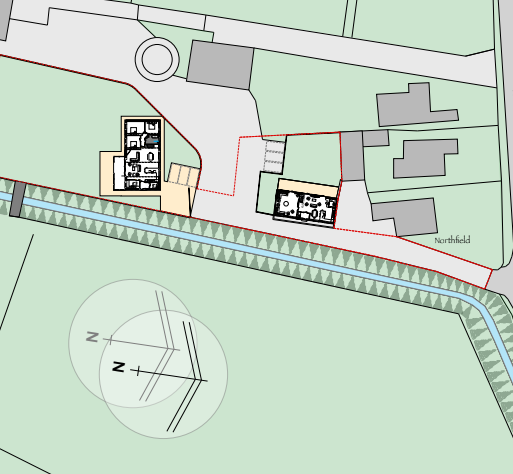
Northfield, Hooks Lane, Hull
The Brief
RIDA Reports was commissioned to conduct a detailed flood risk assessment for the proposed redevelopment of Northfield, located on Hooks Lane in Thorngumbald, Hull. The project involves the change of use of two existing farm buildings into residential dwellings. Classified as a ‘More Vulnerable’ development with an estimated lifespan of 50 to 100 years, a comprehensive evaluation was required to ensure the long-term safety and sustainability of the new homes.
Why the Client Chose RIDA
Because the site is situated within a high-risk flood zone, the client required specialist flood risk and drainage expertise to provide robust technical support for their planning application. They engaged RIDA to navigate stringent national and local planning policies, trusting our ability to deliver practical mitigation strategies for existing structures and to successfully demonstrate compliance with the Exception Test.
The Challenge
The site presented significant environmental constraints, most notably its location within high-risk Flood Zone 3 due to tidal flood risk from the River Humber. The assessment identified that the design tidal flood level, including climate change allowances, reached 3.504m AOD, resulting in a potential 1-metre external water depth during an extreme event. A major site-specific constraint was that raising the finished floor levels to the optimal safe height of 3.804m AOD was not possible due to existing access and structural limitations, meaning the existing floor level of 3.05m AOD had to be retained. Additionally, while surface water and groundwater risks were deemed very low, the development still required a sustainable drainage strategy to ensure local runoff would not exacerbate flood risks elsewhere.
The RIDA Difference
We conducted a detailed flood risk assessment in strict accordance with the National Planning Policy Framework (NPPF), successfully demonstrating that the development met the stringent requirements of the Exception Test. To address the significant tidal flood risk and the inability to raise the finished floor levels, we specified a robust ‘water exclusion strategy’ designed to protect the building up to 4.104m AOD. We recommended the integration of flood-resilient building materials, such as engineering bricks and specific moisture-resistant mortar mixes, alongside solid concrete floor slabs with damp-proof membranes. Furthermore, we advised that all new services, electrics, and fittings be placed above the design flood level, with any lower pipework protected by closed-cell insulation. To sustainably manage surface water, we outlined a Sustainable Drainage System (SuDS) strategy to ensure post-development runoff rates would not increase.
The Outcome
The assessment successfully demonstrated that the site’s flood risks could be actively and safely managed over its lifetime without increasing flood risk in the surrounding area. By detailing clear, actionable structural mitigation measures and identifying a safe evacuation route along Hooks Lane toward Main Road, the report established full compliance with the NPPF. Coupled with the recommendation of a formal Flood Warning and Emergency Response Plan linked to the Environment Agency’s alert service, the comprehensive assessment provided the exact technical evidence needed to confidently support the client’s planning application.