
Windrush Valley School
The Brief
RIDA Reports Ltd was appointed to undertake a detailed flood risk assessment for a proposed extension at Windrush Valley School, located at London Lane in Ascott-under-Wychwood.
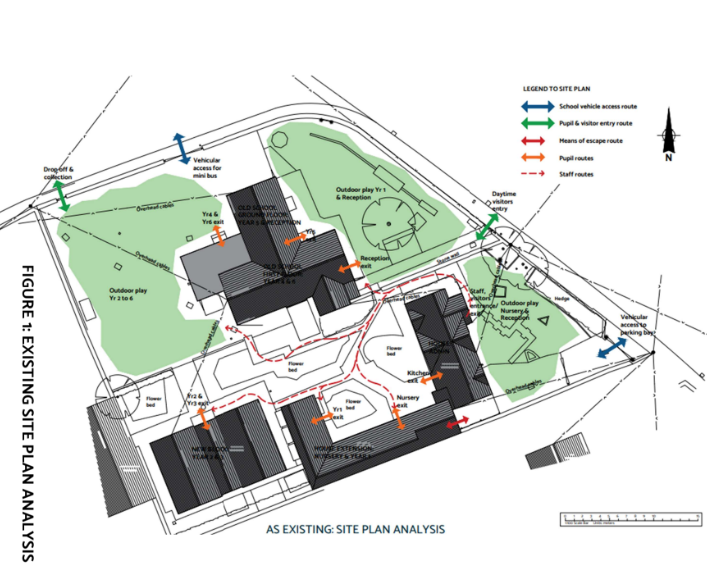
The project involves expanding the existing educational facilities to accommodate a new classroom and multifunctional hall. As the site is classified as a ‘More vulnerable’ development within an area of varying flood risk, a comprehensive assessment was necessary to evaluate the project’s viability and safety.
Why the Client Chose RIDA
The client required a specialised consultancy capable of navigating strict national planning policies for educational facilities. RIDA was chosen due to its proven expertise in conducting detailed flood risk assessments and delivering robust, site-specific mitigation strategies that ensure safety without compromising the operational needs of the school.
The Challenge
A primary constraint was the site’s location within Flood Zone 2, indicating a medium probability of fluvial flooding from the River Evenlode.
In addition, geological data revealed a high susceptibility to groundwater flooding emerging above ground level.
Although the risk from surface water was deemed very low, the site’s slightly impeded soil drainage required careful consideration.
Furthermore, as an educational facility, it was essential to demonstrate that the extension would provide adequate flood protection for pupils and staff, maintain safe evacuation routes, and ensure no increase in flood risk off-site.
The RIDA Difference
RIDA conducted a detailed flood risk assessment to evaluate the fluvial, surface water, and groundwater hazards against current NPPF guidelines.
To address the high groundwater risk, RIDA established a targeted mitigation strategy that included specifying ground floor threshold levels at least 0.25m above ground level and installing a tanking membrane up to 0.3m above the ground level.
Furthermore, the assessment ensured that overland flow paths were maintained around the extension to manage potential groundwater emergence safely.
For surface water management, RIDA recommended the implementation of Sustainable Drainage Systems (SuDS), such as permeable surfaces and filter drains, to successfully replicate the existing drainage regime.
The report also confirmed that the site’s existing finished floor levels already provided sufficient freeboard above the design flood level to safely mitigate fluvial risks.
The Outcome
The detailed flood risk assessment successfully demonstrated that the proposed school extension complies with the NPPF, Environment Agency guidelines, and local planning requirements.
By integrating targeted groundwater resilience measures, sustainable drainage solutions, and recommending a formal flood warning and evacuation plan, RIDA provided the technical evidence needed to show the development is safe and will not increase flood risk elsewhere, thereby robustly supporting the planning application.