33 Radcliffe Rd
The Brief
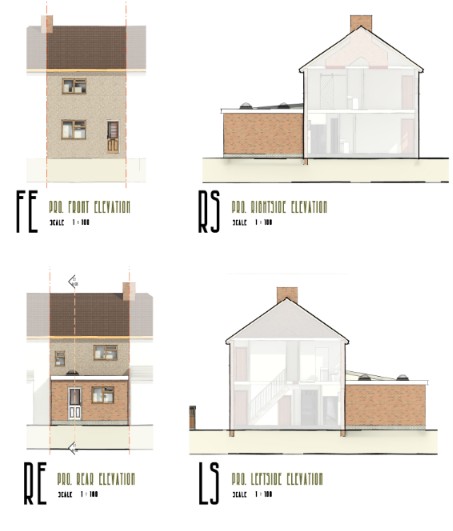
RIDA was instructed to provide a detailed flood risk assessment for a residential property located at 33 Radcliffe Road, Oxford. The proposed development involves the reconfiguration and change of use of the existing dwelling (Class C3) into a House of Multiple Occupancy (HMO, Class C4), alongside the erection of a single-storey rear extension. The primary objective was to demonstrate that the expanded property would remain safe for its occupants over its lifetime without increasing flood risk elsewhere.
Why the Client Chose RIDA
The project required specialised support to navigate complex local planning policies and Environment Agency requirements for a site with high flood risk. The client engaged RIDA for our proven expertise in delivering site-specific flood risk management and sustainable drainage strategies that align seamlessly with the National Planning Policy Framework (NPPF).
The Challenge
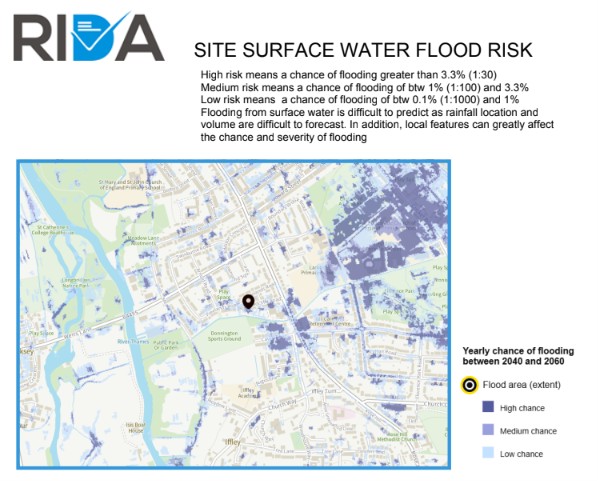
The site presented significant hydrological constraints, primarily its location within fluvial Flood Zone 3, which indicates a high probability of flooding. Furthermore, the property is situated within a designated Critical Drainage Area (CDA), meaning local planning policy demands that any new development must actively reduce downstream flood risks rather than maintaining a merely neutral impact. The site was also identified as requiring protection against potential sewer backflows.
The RIDA Difference
Our team conducted a detailed flood risk assessment to address these multifaceted constraints. To manage the fluvial risk and a calculated design water depth of 0.47m, we recommended a comprehensive ‘water exclusion strategy,’ specifying the use of flood-resilient and resistant building materials up to a level of 57.77m AOD. To protect the property from sewer backflows, we advised the installation of a non-return valve system (Kessel System). We addressed the CDA requirements by specifying the integration of Sustainable Drainage Systems (SuDS) to effectively capture and manage surface water. Finally, we outlined a robust emergency plan, including a first-floor temporary refuge and a safe evacuation route via Radcliffe Road towards Arnold Road, which lies beyond the flood extent.
The Outcome
The assessment demonstrated that the proposed HMO conversion and extension could be developed safely and sustainably. By establishing a clear package of flood resilience measures, sustainable drainage, and safe evacuation procedures, the report effectively supported the planning application, ensuring full compliance with Environment Agency and Oxford City Council standards.