
Drainage Strategy for Planning

Planning Drainage Evidence for Your Application
RIDA prepares drainage strategies for planning applications and validation responses. The scope reflects your proposal, local validation list, flood risk, site constraints and any planning authority or LLFA comments.
Request a Scope and Quote- A validation checklist requests a surface water drainage strategy.
- The planning authority or LLFA asks how runoff will be controlled.
- Your site has flood risk, infiltration, sewer capacity or discharge constraints.
Send your site plans and planning correspondence for an initial scope review.
Request a Scope and QuoteWhat You Will Receive
Technical deliverables
| Technical deliverable | What this helps you progress |
|---|---|
| Planning stage drainage strategy report | A clear drainage narrative for submission, validation or consultation review |
| Review of constraints, impermeable areas, drainage records and discharge options | Evidence that realistic drainage routes have been assessed |
| Runoff, attenuation, exceedance routing, water-quality and maintenance assessment where applicable | Proportionate evidence for planning authority and LLFA review |
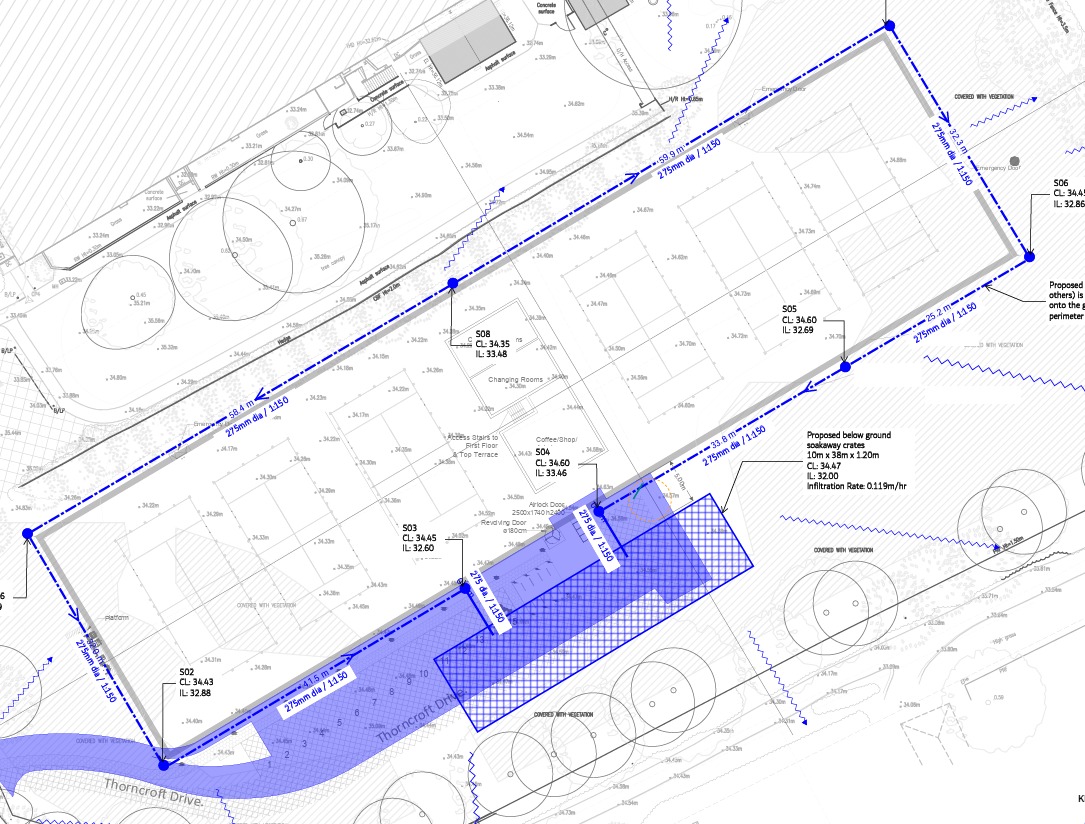
| Concept drawings and supporting calculations at the agreed planning stage | A defined route towards later technical design |
| Foul-drainage commentary where relevant | Coordinated planning evidence for the proposed development |
What this helps you progress
The report records the design basis and identifies further evidence or sustainable drainage system design that may be needed. Appropriate peak rainfall climate change allowances are considered within the agreed scope.
Information Needed to Scope Your Drainage Strategy
- Site address and red line boundary — to check the site-specific planning and drainage context.
- Proposed layout and development description — to define impermeable areas and assessment scope.
- Planning status, reference and authority correspondence — to review validation requests or consultee comments.
- Topographical survey, drainage records, utilities, ground investigation or infiltration data — to assess levels, infrastructure and discharge options.
- Any Flood Risk Assessment or earlier drainage work — to coordinate the technical evidence.
RIDA will identify evidence gaps before quoting. Flood Risk Assessments for planning can be coordinated with the drainage scope where both are needed.
Drainage Strategy for Planning FAQs
Do I need a drainage strategy for my planning application?
The requirement depends on the proposal, flood risk, site constraints, local validation list and authority advice. RIDA can review your plans and correspondence to confirm a suitable scope.
What do you need from me to quote for a drainage strategy?
Send the site location, red-line boundary, proposed layout and any authority correspondence. Surveys, drainage records and earlier reports help define the required technical work.
What will a planning-stage drainage strategy include?
The agreed package may include a site review, drainage hierarchy, discharge assessment, runoff and attenuation calculations, exceedance routes, maintenance principles, foul drainage commentary and concept drawings.
Can RIDA respond to LLFA or planning officer drainage comments?
Yes. RIDA can review the comments, assess the available evidence and prepare an agreed response or revised strategy scope. Extra surveys, testing or design work may be needed.
Request a Drainage Strategy Scope and Quote
Send your site location, proposed layout and planning correspondence. RIDA will review the application context, confirm the required information and explain whether further surveys, testing or technical design are needed.
Send Your Site Details for a Quote