
The Gladman Judgment 2026: Re-examining the Sequential Test in Flood Risk and Planning Decisions

One of the most talked-about planning decisions in recent years is the High Court’s 2026 decision in Gladman Developments Ltd. v. Secretary of State for Housing, Communities and Local Government & Lancaster City Council. Although the case focused on a particular Lancaster housing proposal, its implications go well beyond a single development site.
Fundamentally, the ruling makes clear how the Sequential Test should be used to evaluate flood risk within the planning system. This is a matter that directly affects developers, planning authorities, and flood risk experts like RIDA Reports.
This article discusses the ruling, what it does (and does not) change, and why it is important for flood risk assessments and future planning.
The Sequential Test: Purpose and Policy Context
A fundamental component of UK planning policy, the sequential test is incorporated into the National Planning Policy Framework(NPPF). Its main objective is simple:
● To direct development toward regions with the least chance of floods.
In practice, the test mandates that before authorising development in higher-risk areas, decision makers take into account whether there are reasonably available alternative sites in areas with reduced flood risk.
The sequential Test’s main goals:
● Minimise future property and human vulnerability to flooding
● Promote sustainable land use planning
● Reduce the need for artificial flood defences
● Support long-term resilience as climate risk increases
However, while the policy intent is clear, its application has often been rigid, particularly at the appeal stage, a rigidity that the Gladman judgment directly addressed.
Background to the Gladman case
Proposals for a 644-house residential development on Bailrigg Lane in South Lancaster were submitted by Gladman Developments. The issue revolved around the features of the site:
● The site was mostly located in Flood Zone 1
● A tiny area of land stratched into Flood zones 2 and 3
Burrow Beck and other nearby watercourses were connected to the flood danger.
In spite of this, the plan called for a thorough drainage plan that incorporated sustainable drainage systems (SuDs) to control surface water and, based on data, possibly lessen the site’s current flood risk.
Why the Scheme Was Initially Refused
Lancaster City Council refused the application in 2023. When the decision was appealed, the Planning Inspector upheld the refusal in 2024. A central reason was the absence of a formal Sequential Test submission.
Crucially, the inspector’s own findings acknowledged that:
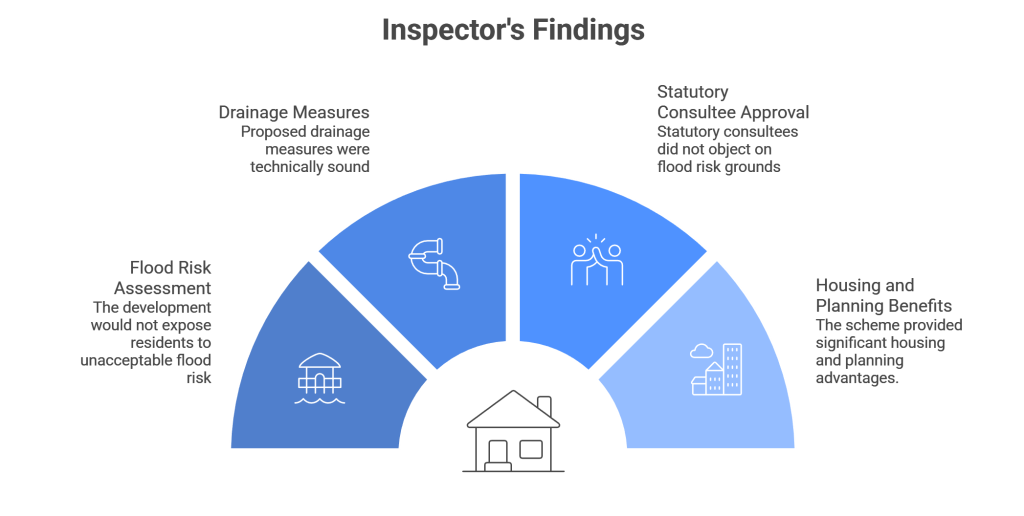
Despite this, the lack of a Sequential Test was treated as a determinative failure, overriding all other considerations.
The High Court’s 2026 Decision
In January 2026, the High Court quashed the inspector’s decision. The ruling did not state that the Sequential Test was unnecessary. Instead, it focused on how the test was treated within the planning balance.
The court’s central finding
The inspector had erred in law by treating the absence of a sequential test as an automatic reason for refusal, rather than weighing it alongside other material planning considerations. This distinction is critical.
What the judgement clarifies?
To avoid misinterpretation, it’s important to be precise about the judgment’s scope.
What the Gladman ruling does clarify?
- The Sequential Test is still a useful and significant planning tool.
- It is not always deadly to fail to submit a sequential test
- The absence must be justified by decision-makers in light of additional facts.
- It is important to evaluate flood risk in context rather than in isolation.
What the judgement does not do?
- It does not remove the Sequential Test requirement
- It does not weaken flood risk policy.
- It does not give developers a free pass in higher-risk areas.
Planning Balance: A shift in emphasis
One of the most significant aspects of the ruling is its reinforcement of planning balance.
Rather than treating policy compliance as a checklist, the Court emphasised that inspectors and authorities must consider:
- Flood risk evidence
- Drainage and mitigation measures
- Housing need and supply
- Environmental and social benefits
- Site-specific constraints
Planning balance before vs after Gladman
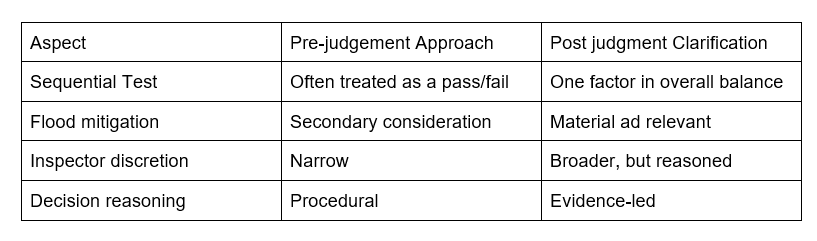
This method is more in line with the complexity of real-world planning, where it is not always possible to achieve complete policy compliance.
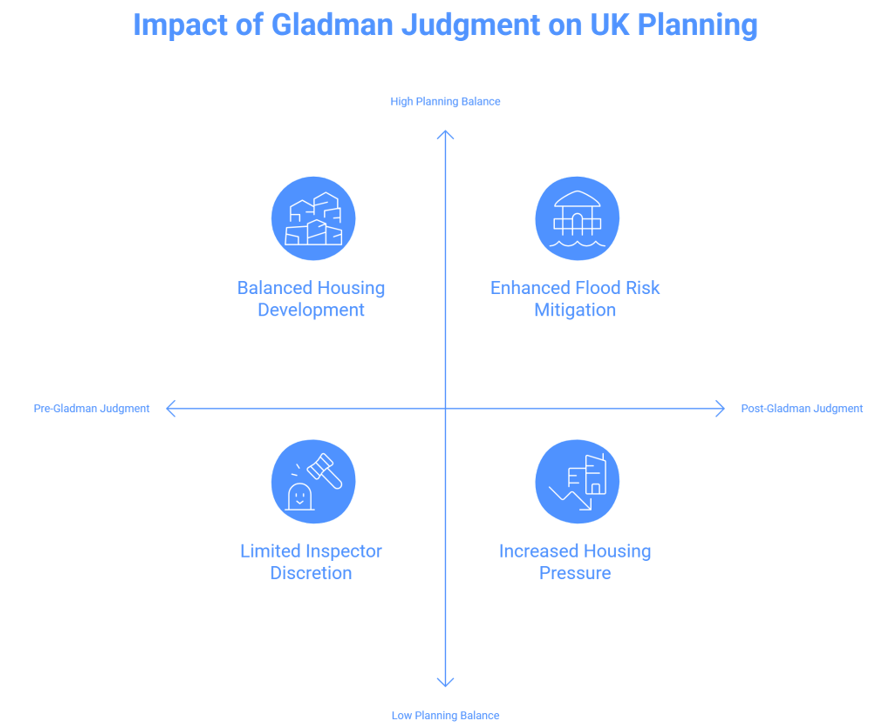
Consequences for evaluating flood risk
The ruling highlights the significance of solid, convincing technical evidence for flood risk experts like RIDA Reports.
Key takeaways for flood risk practitioners:
- Drainage strategies must be clearly explained and evidenced
- Mitigation should demonstrate risk reduction, not just neutrality
- Flood risk assessments should explicitly link to the planning balance.
- Sequential test inputs should be integrated early, where possible.
Why this matters for developers:
The decision emphasises both opportunity and responsibility from the standpoint of growth.
Opportunities:
- Increased awareness of site-specific mitigating
- Decreased likelihood of rejection due to technical errors alone
- More impartial appeal decisions in cases with substantial evidence
Responsibilities:
- In most situations, sequential testing is still anticipated
- Flood risk needs to be fully addressed.
- Planning submissions ought to be transparent and well-reasoned
This reinforces the value of engaging experienced flood risk consultants early in the planning process.
Useful takeaways from the Gladman Decision:
Several useful lessons for upcoming applications are provided by the case:
- Don’t rely just on mitigation; policy context is still important.
- If applicable, provide a detailed explanation for the lack of a sequential test.
- Link evidence of flood risk to broader planning advantages.
- Steer clear of procedural flaws that could make appeals more difficult.
What the Gladman Judgment Means for Flood Risk and Planning Consultancy
For a consultancy like RIDA Reports, operating at the intersection of planning and flood risk, the judgment reinforces the strategic importance of:
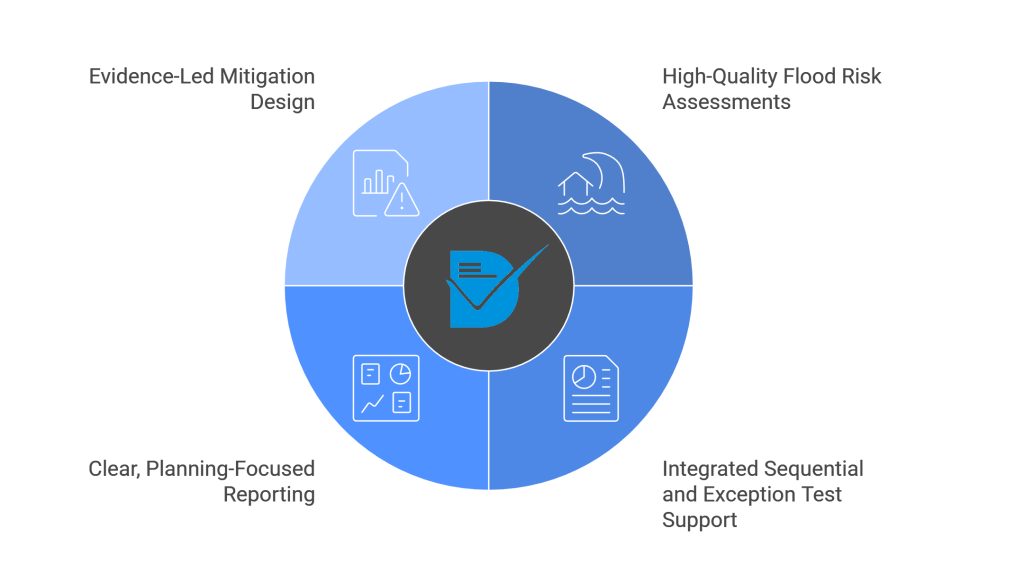
The need for precise, reliable flood risk advice is probably going to rise as inspectors and planning agencies adjust to the Gladman judgement.
Conclusion
The Gladman Judgement from 2026 is a significant clarification rather than a change in policy. Flood risk planning still heavily relies on the Sequential Test, but it now needs to be used with context, proportionality and openness.
The message is clear for planners, developers, and flood risk specialists alike: solid proof, compelling logic, and fair judgment are more important than strict formality.
This more nuanced approach provides a workable way forward in a time of rising flood risk and housing pressure, where safety, sustainability and sound planning judgement can coexist.
Practical life examples
Partially Flood-Risk Residential Development
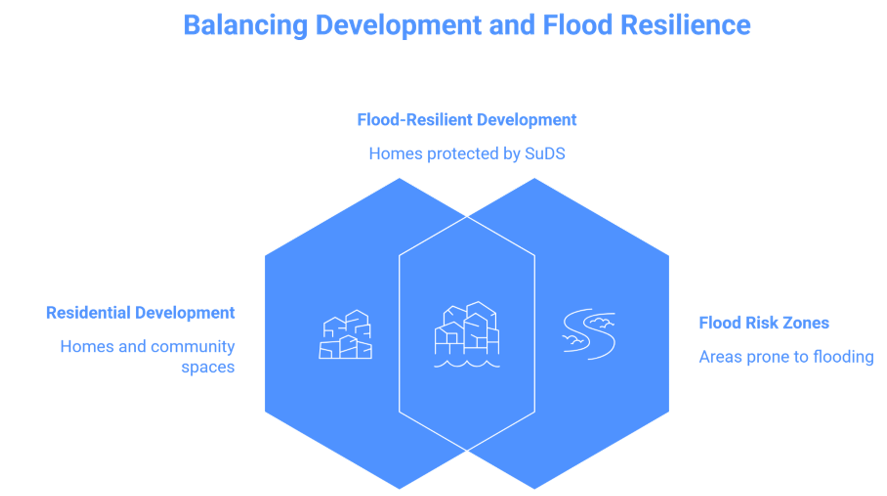
Scenario
The majority of the proposed 120-home residential project is located in Flood Zone 1, with a tiny portion extending into Flood Zones 2 and 3 because of a nearby watercourse. A flood risk assessment verifies that no homes are situated in higher-risk locations and that sustainable drainage practices lower surface water runoff without raising the risk of flooding downstream.
Before the Gladman Judgment
Even in cases where flood risk was clearly controlled, the lack or inadequacy of a Sequential Test could be regarded as a compelling grounds for rejection.
After the Gladman Judgment
Before making a decision, decision-makers must evaluate the lack of a Sequential Test within the larger planning balance, taking into account mitigation strategies, flood risk evidence, and overall planning advantages.
This highlights the significance of having validated Flood Risk Assessments that show true risk management instead of depending only on following the rules.
Frequently Asked Questions
The sequential test is a planning policy tool designed to steer development to areas at lowest flood risk. Developers must demonstrate that there are no reasonably available alternative sites in lower risk areas before building in higher-risk zones.
The 2026 High Court ruling clarified that a missing Sequential Test alone cannot automatically result in refusal. Inspectors must now weigh flood risk evidence, mitigation measures, and planning benefits as part of the overall planning balance
No. Planning policy still heavily relies on the Sequential Test. Rather than being a stand-alone procedural barrier, the ruling merely highlights that it should be used appropriately and in context.
Assessments of flood risk are now even more important. Planning decisions can be influenced by well-documented mitigation methods, such as flood risk reduction strategies or sustainable drainage systems (SuDS), even in the absence or incompleteness of a formal Sequential Test.