
Littleborough Flood Risk Management Scheme: £86m River Roch Defence
An overview of the £86 million Littleborough Flood Risk Management Scheme on the River Roch, its cost drivers, flood protection standard and low-carbon construction trials.

The Littleborough Flood Risk Management Scheme is an £86 million Environment Agency-led project to manage flood risk from the River Roch for Rochdale and Littleborough in Greater Manchester, designed to provide protection over the next 100 years. It was launched after Storm Eva flooding in 2015 affected over 300 properties, and its current phase is also serving as a trial site for low-carbon construction methods.
Key Technical Takeaways
- The Littleborough Flood Risk Management Scheme is an £86 million Environment Agency-led project protecting Rochdale and Littleborough from River Roch flooding for the next 100 years.
- The scheme was initiated after Storm Eva flooding in 2015 affected over 300 properties and is delivered by VolkerStevin with design by Jacobs.
- Phase 1A, including Riverstone Bridge replacement and flood wall works, completed in 2024, while Phase 1B’s Category A flood storage reservoir is under construction.
- Cost drivers include an 80,000m³ reservoir, over 500 well points, difficult ground conditions and a Network Rail interface near the Calder Valley Line.
- Phase 1B hosts the Environment Agency’s Decarbonisation Technology Accelerator, trialling low carbon steel, low carbon concrete and modern methods of construction.
What is the Littleborough Flood Risk Management Scheme?
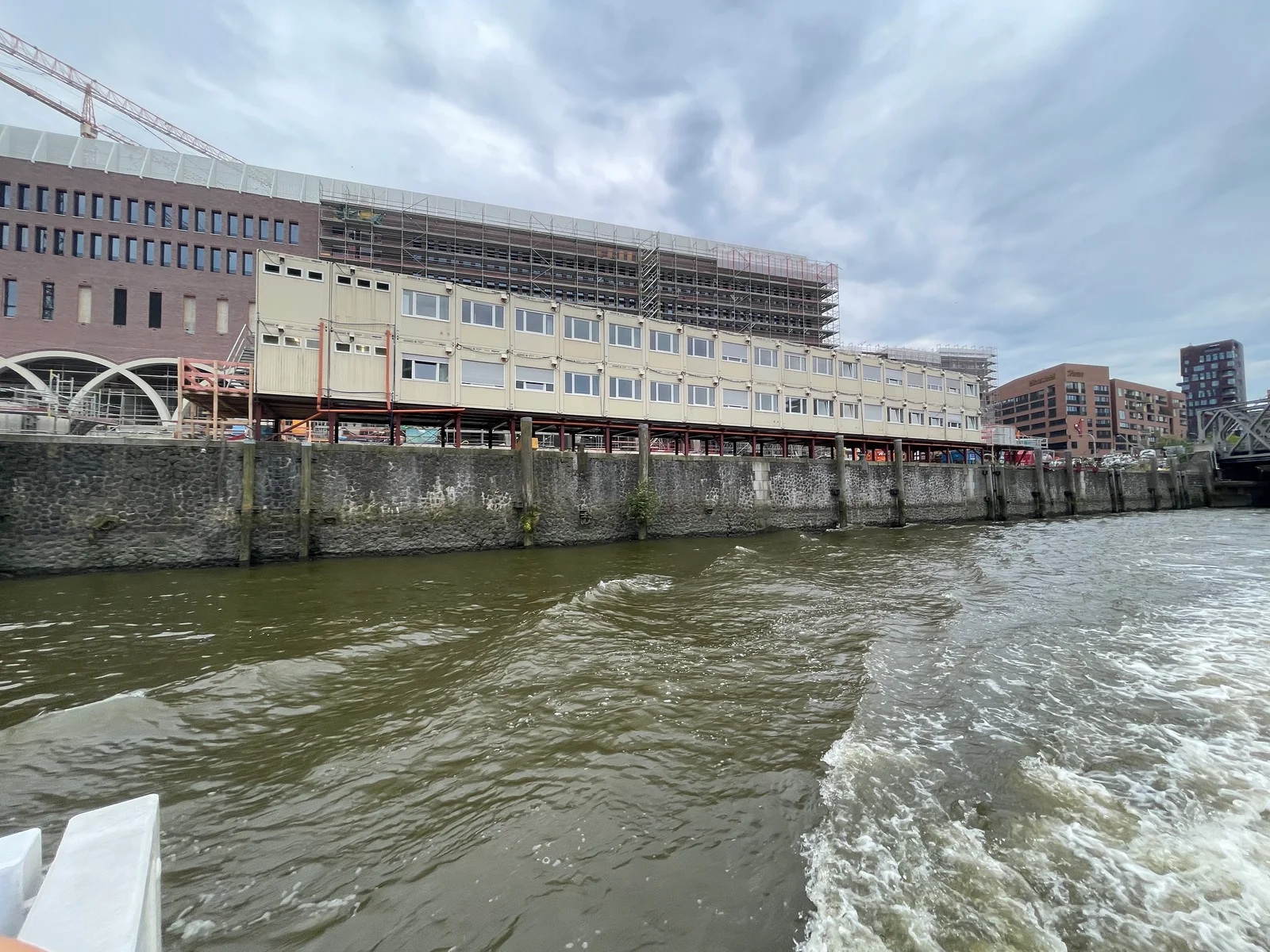
The Littleborough Flood Risk Management Scheme is an Environment Agency-led project to manage flood risk from the River Roch for Rochdale and Littleborough in Greater Manchester. It was first approved in May 2020 with a projected cost of £86M and is designed to provide protection over the next 100 years. It was initiated in response to flooding caused by Storm Eva in 2015, described as the most severe incident in the area for a generation, which affected over 300 properties.
The scheme forms part of a three-phase programme that ranks among the largest inland flood relief schemes in northern England. It was designed by framework consultant Jacobs and is being delivered by contractor VolkerStevin, working with Rochdale Borough Council and funding partners including Network Rail, Transport for Greater Manchester and the Department for Education.
- Phase 1A: Riverstone Bridge replacement, river channel widening and flood wall enhancement, completed in 2024
- Phase 1B: a Category A flood storage reservoir, currently under construction
- Ancillary works at Grove Lodge, Centre Vale, Greenvale Business Park, Ealees Brook and Reddyshore Brow
Why the scheme costs £86 million
The £86M budget reflects the scale and technical complexity of the works rather than a single large structure. Phase 1B alone centres on an approximately 80,000m³ flood storage reservoir in two elements, Gale West and Gale East, requiring embankments, sheet piling and a flood control structure around 80m long and 8m tall at its highest point. Overall, Phase 1B involves roughly 1,800m³ of concrete and about 2,000 tonnes of sheet piles and reinforcement.
Site constraints add further cost. The works require diverting the River Roch through the site to hold back flow from the river and Greenvale Brook during flooding, and a culvert is needed under the railway line to allow water into new storage areas during extreme weather. Over 500 well points were installed to lower groundwater and enable safe excavation.
Ground conditionsGeotechnical
Soft clays overlying sand and gravel with high, locally artesian groundwater, plus Ochre mine water contamination from historic mine workings.
Network Rail interfaceInfrastructure
A 24-hour track monitoring plan with trigger levels was agreed during dewatering, due to settlement risk near the Calder Valley Line.
Category A specificationReservoir standard
The reservoir’s high-consequence classification, where a breach could endanger lives, drives stringent design and construction requirements.
VolkerStevin senior project manager Richard Walsh identifies geotechnical conditions, the Network Rail interface and the stringent Category A reservoir specification as the main project challenges. Funding draws on Local Levy and various Grant in Aid sources, including Other Government Departments, Asset Replacement Allowance and Affordability Allowance funding streams.
The flood protection standard: delivering 100-year defence
The scheme is designed to manage flood risk over the next 100 years, aligning with national planning guidance. Planning Practice Guidance states that residential development can be assumed to have a lifetime of at least 100 years for flood risk planning purposes, unless there is specific justification for a different period. For planning purposes, the design flood is generally a 1% annual probability river flooding event – a 1 in 100 chance in any given year – or 0.5% annual probability for tidal flooding.
Residential development can be assumed to have a lifetime of at least 100 years for flood risk planning purposes, unless there is specific justification for a different period.
This standard governs more than the probability of a defence being overtopped. Non-statutory technical standards for sustainable drainage systems require drainage to be designed so flooding does not occur in buildings during a 1 in 100 year rainfall event, with exceedance flows beyond that managed via routes that minimise risk to people and property.
The bottom line: A 1-in-100-year standard is a planning baseline, not a guarantee against all flooding. Schemes must also address exceedance – what happens when that threshold is exceeded – not only the probability of the event itself.
Low-carbon construction methods used on site
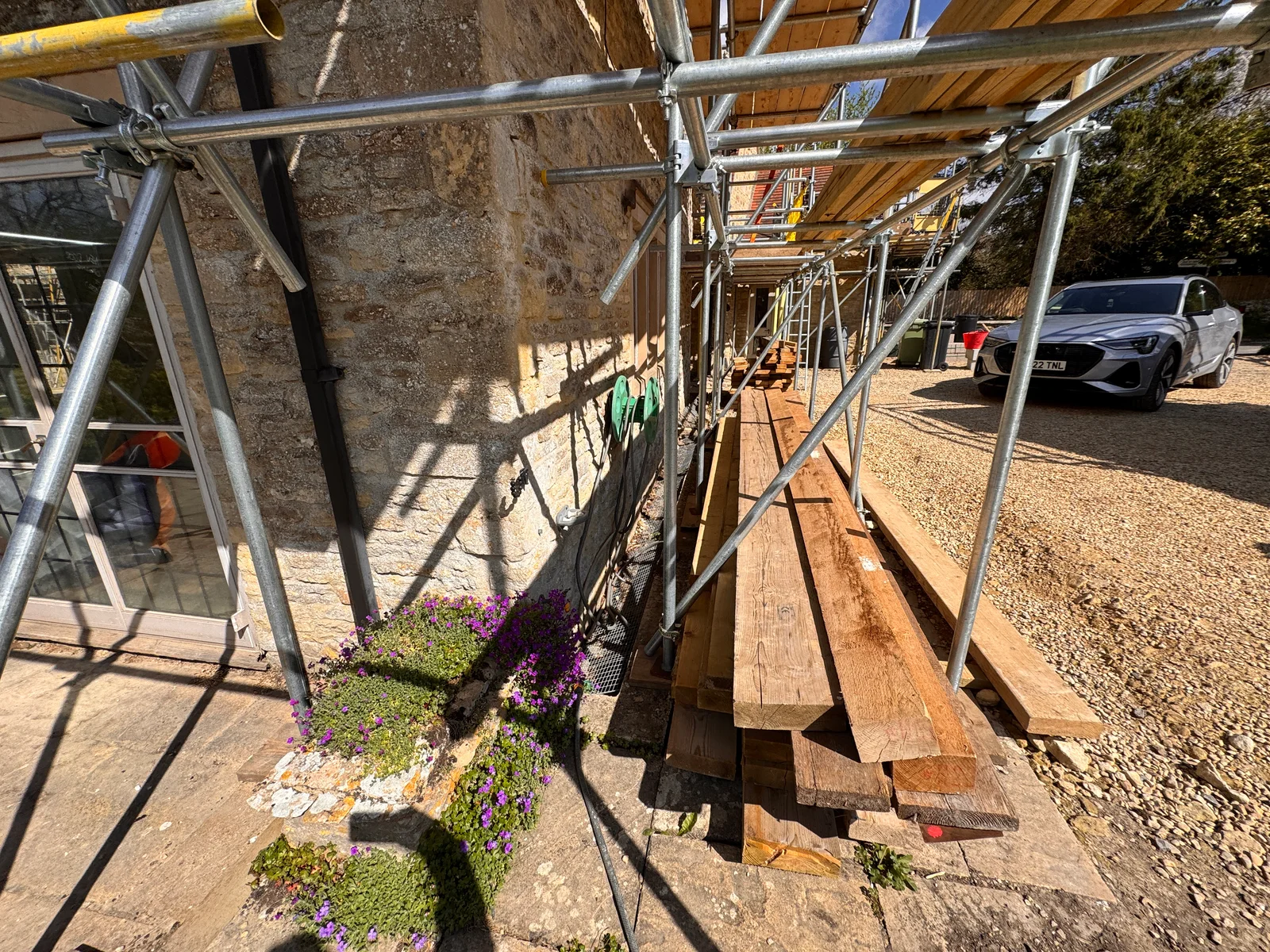
Phase 1B of the Littleborough Flood Risk Management Scheme has been selected as a host site for the Environment Agency’s Decarbonisation Technology Accelerator (EA DTA), a three-year programme running from November 2023 to April 2027. The DTA targets a 20% reduction in carbon emissions and new efficient ways of working across the EA’s capital programme by 2030.
At Littleborough, the programme is trialling three specific low-carbon solutions on live construction works: low carbon steel, low carbon concrete, and modern methods of construction (MMC). The scheme therefore functions as a practical test bed rather than a theoretical exercise, with outcomes intended to feed back into wider Environment Agency standards and specifications.
Important context: These methods are being trialled under a dedicated accelerator programme at one site. The findings do not establish that low-carbon construction is mandated across all Environment Agency flood schemes.
Materials and embodied carbon reduction
Standard sheet piles produced in a blast furnace carry high embodied carbon, typically 1.8 to 2.5 tonnes of CO2 per tonne of steel. Phase 1B instead uses EcoSheetPile Plus from ArcelorMittal, manufactured in an electric arc furnace from 100% scrap steel using 100% renewable energy.
This substitution is reported to reduce carbon by 2,400 tonnes of CO2, representing 16% of the project’s carbon budget. Phase 1B overall involves about 1,800m³ of concrete and around 2,000 tonnes of sheet piles and reinforcement, giving the material choice material weight within the scheme’s total footprint.
An on-site materials testing laboratory was established to support earthworks, helping ensure the structural integrity of flood defences while supporting the use of low-carbon materials and managing on-site environmental impact. This local testing capability allowed material performance to be verified without relying solely on off-site certification.
Construction process and plant
Beyond material substitution, the scheme’s design itself was adjusted to reduce resource use. The embankment on the side parallel to the railway was changed from a clay embankment to a sheet pile wall, increasing storage capacity while narrowing the construction footprint.
VolkerStevin senior project manager Richard Walsh identifies geotechnical conditions, the Network Rail interface and the stringent Category A reservoir specification as the project’s main challenges. Over 500 well points were installed to lower groundwater and enable safe excavation, with a 24-hour track monitoring regime agreed with Network Rail to manage settlement risk near the Calder Valley Line.
The available source material does not detail specific plant electrification measures or logistics planning beyond these points, so no further claims on operational carbon during construction can be made here.
Is low-carbon construction now expected on Environment Agency schemes?
The Environment Agency’s national engineering innovation team manager, Andy Powell, frames the DTA’s purpose in terms of mainstreaming.
The DTA aims to mainstream low carbon solutions and efficient processes as ‘business as usual’ across project teams, delivery partners and the supply chain.
Powell further describes the programme as pulling through the latest solutions and techniques into EA requirements and standards, with carbon as a significant driver and mainstreaming innovation at scale. This signals clear institutional intent to move beyond pilot status.
However, intent and formal requirement are not the same thing. Whether low-carbon construction methods are now formally expected or mandated across all Environment Agency flood schemes, beyond the DTA pilot programme, is not established by the available sources.
The bottom line: Littleborough demonstrates EA direction of travel, not a confirmed universal requirement. Treat carbon reduction as an emerging expectation to plan for, not yet a fixed mandate to cite as settled policy.
What this means for developers and consultants preparing flood defence proposals
Even where carbon reduction is not formally mandated for flood schemes generally, existing planning policy already pushes submissions in this direction. NPPF policy CC1 requires development plans to take a proactive approach to mitigating and adapting to climate change, including radical reductions in greenhouse gas emissions, while CC2 asks proposals to conserve energy and resources and reuse existing structures and materials where possible.
Environment Agency FRA template guidance from 2025 requires applicants to provide a clear summary of flood risk measures categorised as avoid, control, mitigate or manage, avoiding vague commitments. A scheme such as Littleborough, with quantified carbon figures tied to specific material choices, illustrates the level of specificity that evidence-led submissions are moving towards.
DevelopersBusiness case
Expect carbon reporting to feature in scheme business cases and funding justifications, particularly where Grant in Aid or Local Levy funding is involved.
Architects and designersDesign choices
Material substitution, such as low-carbon steel or concrete, and footprint-reducing design changes can be justified with quantified carbon savings, as demonstrated at Littleborough.
Planning consultantsFRA drafting
Avoid vague mitigation commitments in FRAs; align measures with the avoid, control, mitigate or manage categories the Environment Agency template now expects.
| Test or decision | Source of requirement | Applies to |
|---|---|---|
| 1% (1 in 100) river flood design event | Planning Practice Guidance | All development in flood risk planning |
| 100-year development lifetime assumption | Planning Practice Guidance | Residential development, unless justified otherwise |
| Avoid/control/mitigate/manage categorisation | EA FRA template guidance, 2025 | FRA submissions to the EA |
| Radical greenhouse gas reduction approach | NPPF policy CC1 | Development plans |
| Conserve energy/resources, reuse materials | NPPF policy CC2 | Development proposals |
| 20% carbon reduction target by 2030 | EA Decarbonisation Technology Accelerator | EA capital programme, via pilot sites |
Scheme timeline: when will Littleborough be completed?
The Littleborough Flood Risk Management Scheme was first approved in May 2020, with a projected cost of £86 million. It was initiated by the Environment Agency following the Storm Eva flooding of 2015, described as the most severe incident in the area for a generation, which affected over 300 properties. The scheme is designed by framework consultant Jacobs and delivered by contractor VolkerStevin, working with Rochdale Borough Council and funding partners including Network Rail, Transport for Greater Manchester and the Department for Education.
The programme is split into two construction phases. Phase 1A, comprising the Riverstone Bridge replacement, channel widening, landscaping and flood wall improvements, was completed in 2024. Phase 1B, now under construction, centres on a Category A flood storage reservoir at Gale West and Gale East, alongside works at Grove Lodge and several ancillary sites.
Important: , so readers should check the Environment Agency’s published programme updates for the latest milestone.
Littleborough forms part of a three-phase programme that is one of the largest inland flood relief schemes in northern England. It is designed to manage River Roch flood risk for Rochdale and Littleborough over the next 100 years, consistent with Planning Practice Guidance, which treats residential development as having a design lifetime of at least a century for flood risk planning purposes.
How RIDA Reports supports low-carbon flood resilience planning
Littleborough demonstrates that carbon reduction is now being tested directly within live flood infrastructure delivery, not just in policy documents. The Environment Agency’s Decarbonisation Technology Accelerator programme, hosted at Phase 1B, is trialling low carbon steel, low carbon concrete and modern methods of construction with a target of 20% emissions reduction across the EA’s capital programme by 2030. For engineers and planners preparing flood defence and drainage proposals, this signals a direction of travel worth reflecting in design choices and material specifications now, ahead of any wider mandate.
RIDA Reports helps developers, architects and planning consultants translate these developments into compliant, evidence-led submissions. Our flood risk assessments align with current PPG and NPPF requirements, including policies CC1 and CC2 on climate change mitigation and resource-efficient design, while our drainage strategy support addresses non-statutory SuDS technical standards for the 1 in 100 year event.
- Review current FRAs against the Environment Agency’s 2025 template guidance, ensuring flood risk measures are clearly categorised as avoid, control, mitigate or manage.
- Consider low carbon material options, such as electric arc furnace sheet piling, where structural specifications allow.
- Contact RIDA Reports for FRA and drainage strategy support tailored to your scheme’s flood risk and carbon reduction requirements.
Frequently Asked Questions
What is the Littleborough Flood Risk Management Scheme and why does it cost £86 million?
It is an Environment Agency-led project to manage flood risk from the River Roch for Rochdale and Littleborough, approved in May 2020 with a projected cost of £86 million and designed to provide protection over the next 100 years. The £86m budget reflects the scale and technical complexity of the works, including an 80,000m³ flood storage reservoir, embankments, sheet piling, a flood control structure, river diversion, a railway culvert, and over 500 well points, plus difficult ground conditions and a Network Rail interface.
How are UK flood defence schemes reducing carbon emissions during construction?
At Littleborough, Phase 1B is trialling low carbon steel, low carbon concrete and modern methods of construction as part of the Environment Agency’s Decarbonisation Technology Accelerator. Using EcoSheetPile Plus steel made in an electric arc furnace from 100% scrap steel is reported to cut carbon by 2,400 tonnes of CO2, 16% of the project’s carbon budget.
What flood protection does the River Roch scheme provide for Rochdale and Littleborough?
The scheme is designed to manage flood risk from the River Roch for Rochdale and Littleborough over the next 100 years, aligning with Planning Practice Guidance. For planning purposes the design flood is generally a 1% annual probability event, though this is a planning baseline rather than a guarantee against all flooding.
Are low carbon construction methods now expected on Environment Agency flood schemes?
The Decarbonisation Technology Accelerator aims to mainstream low carbon solutions as business as usual across project teams and the supply chain, showing clear institutional intent. However, whether these methods are formally expected or mandated across all Environment Agency flood schemes beyond this pilot programme is not established by the available sources.
When will the Littleborough flood scheme be completed?
Phase 1A, including the Riverstone Bridge replacement and flood wall improvements, was completed in 2024. Phase 1B, the Category A flood storage reservoir, is currently under construction, but its precise completion date is not confirmed in the available source material.
Recommended sources
Need Support With Flood Risk or Drainage Strategy?
RIDA Reports helps developers, architects and planning consultants prepare evidence-led flood risk assessments and drainage strategies that reflect current Environment Agency expectations.
Get in Touch