
Flood Risk Assessment EIA
Flood risk assessment is required for developments at flood risk. It ensures that new
development projects comply with UK planning regulations and can handle flood risks. A well-prepared FRA streamlines the planning process and protects your site from flood damage.
For larger projects, an Environmental Impact Assessment (EIA) is typically required to evaluate a development environment impact of development. In such cases, a Flood RISK assessment is included in the EIA’s analysis and is usually performed in the water chapter. This is done to ensure flood risks are considered along with other environmental factors.
If your development is in a flood-prone area, or you need an FRA as part of your EIA, RIDA Reports specialises in the Environmental Agency and NPPF-compliant flood risk assessment, and our reports are available in 48 hours!

Flood Risk Assessment vs Environmental Impact Assessment: what’s the difference?
A flood risk assessment focuses only on flood hazards at a site, such as rivers, sea, surface water, critical drainage, etc. Whereas an Environmental Impact Assessment is done for bigger projects like roads to see their impact on the environment.
A Flood Risk Assessment can be used in two ways:
- It can be required as part of the EIA for studying the flood impact under the water chapter
- It can also be a standalone requirement for planning permission whenever the development faces flood risk. Even if an EIA is not needed. In the UK, this is guided by the National Planning Policy Framework, which requires FRAs for developments in flood-risk areas.
We at RIDA Reports prepare FRAs that satisfy both standalone planning requirements and necessary EIA requirements if required. Our reports will ensure compliance with the national policy and the nature of the project.
Our Clients






When is a Flood Risk Assessment required in the UK?
A flood risk assessment is mandatory under the UK planning rules. The following conditions mandate an FRA for any development in the UK:
- Flood Zones 2 or 3: All developments in EA flood zones 2 or 3. The flood map for planning by the Environment Agency is available to check the flood zone of your site.
- Flood Zone 1 developments ≥ 1 hectare: Even though flood zone 1 is usually safe for developments, if the development is of 1 hectare or bigger, a flood risk assessment becomes mandatory.
- Surface water flood risk: Surface water is the leading cause of flood risk in England. Hereby, an FRA is mandatory for sites with critical drainage problems or high surface water flood risk.
- Increased vulnerability or change of use: If a proposal can increase flood risk or development is based on a change of use, then this type of development may trigger an FRA.
- Adjacent to main rivers or flood defences: Any development that needs an Environment Agency permit, such as altering a river bank,k will include a flood risk assessment for planning permission.
In short, check the Environment Agency’s flood map for planning or check for long-term flood risk tools by the gov.uk to understand the planning requirements of your site. If you still remain unsure, you can contact our flood risk consultants to discuss your project and get clear guidance.
Common Flood Risks considered in an FRA
A FRA evaluates all flood sources and their potential impacts. Key flood risks include:
- Fluvial (river) flooding: Rivers can overflow due to prolonged rainfall and can cause flooding. We at RIDA Reports assess historical flood levels and perform hydraulic models for in-depth assessment.
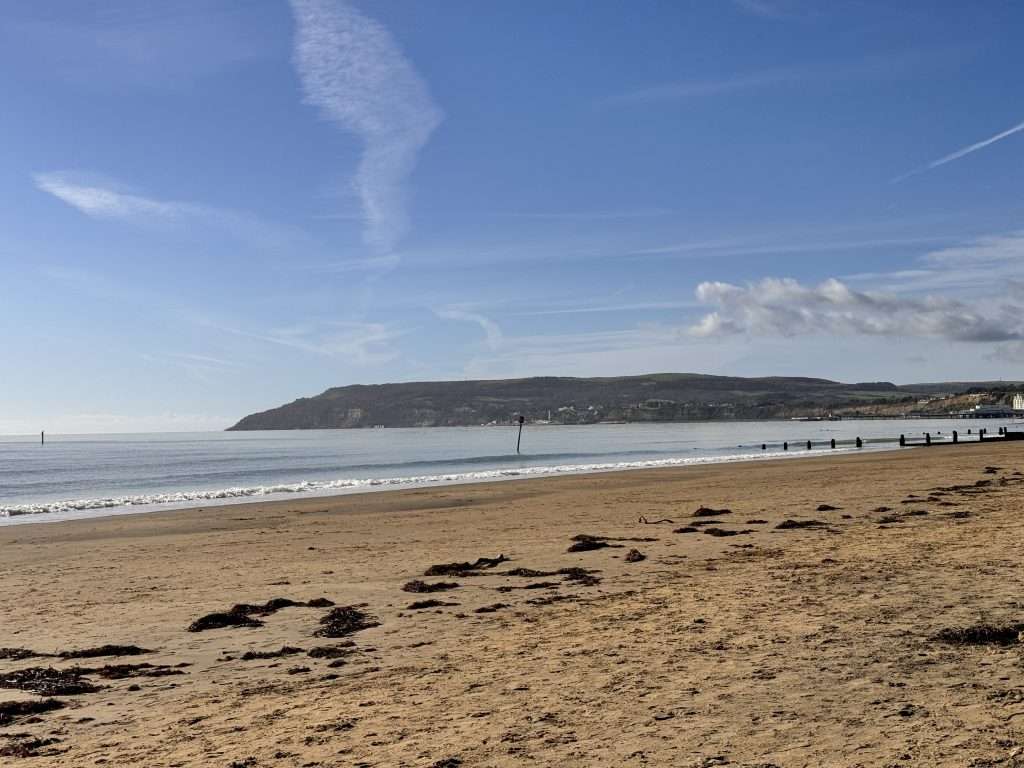
- Tidal/coastal flooding: Storm surges or high tides can push coastal water in land and cause flooding. We use coastal flood maps and data to evaluate this hazard and propose appropriate mitigation measures against it.
- Surface Water (pluvial) flooding: As we stated earlier, surface water is the leading cause of flooding in the UK, so an FRA examines sites’ topography and drainage and often performs modelling to understand how the runoff rates will change with development.
- Groundwater flooding: Rising water tables can cause groundwater flooding. We at RIDA Reports check ground conditions and historic levels to see if this is a concern on your site.
- Reservoir/dam failure; This is a very rare but at the same time a severe risk. We make sure to check if your site is within any reservoir zones, and if it is, then the FRA will map the potential flood extent from a breach.
- Sewer or drainage failure: Overloaded sewers or blocked sewers can cause flooding in urban areas. If required, we in our FRA if assess whether sewer capacity is adequate and recommend SuDS to avoid drainage over the floor
For each source, our expert engineers use specific flood maps, such as Flood Map for Planning, RoFSW, etc., and use official flood data from the Environment Agency. Our process also includes flood modelling and advanced methodology to provide you with a complaint report and lifetime protective strategies.
Key components of a Flood Risk Assessment by RIDA Reports
An FRA by RIDA Reports follows the Environment Agency and NPPF guidance and includes everything that makes up a compliant flood report.
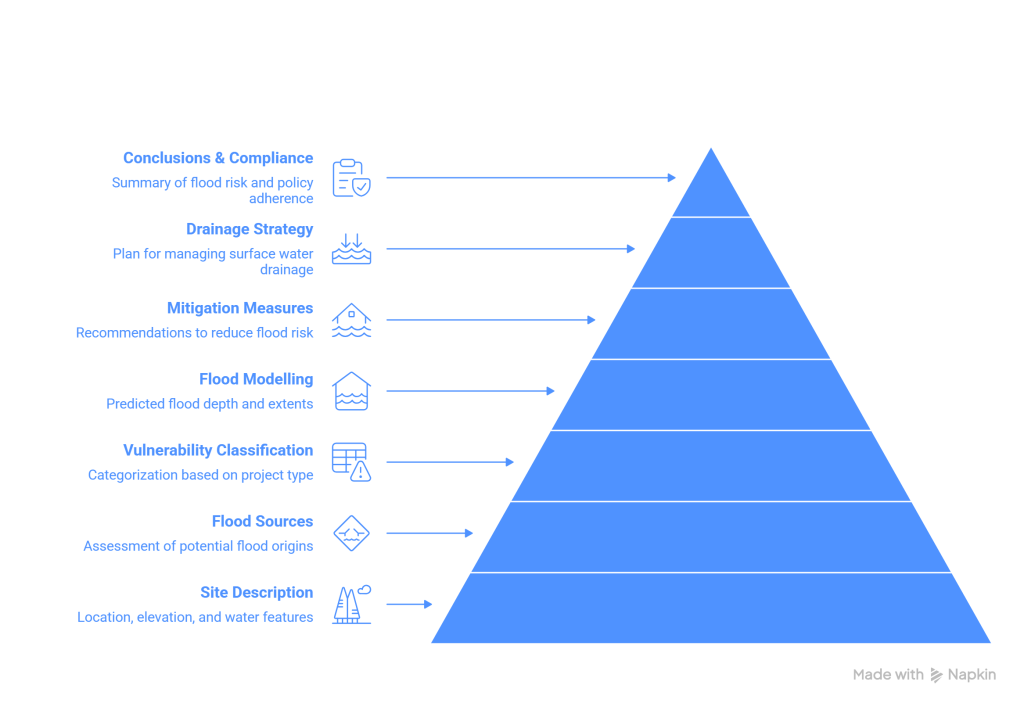
- Site Description: Our reports include the location, elevation, nearby water features and defences of your site. This is usually done to see the context.
- Flood Sources and Flood Probability: Our reports include an assessment of all flood sources and mention which sources can affect your site and how.
- Vulnerability classification: We classify the project as residential, commercial or etc based on the information and project description. Usually, the more vulnerable is a classification for homes. Then we check this classification against the flood zone to see if the development is appropriate.
- Flood Modelling Results: Our reports include maps and tables that show predicted flood depth and extents. We include worst-case events and climate change scenarios,
- Mitigation Measures: Since our reports are detailed, we include clear mitigation measures. For example, raised floor levels, flood resilient construction material recommendations and more. This is done to protect the property and prevent the risk of flooding elsewhere.
- Surface water drainage strategy: Our FRA may also include a drainage report and a drainage strategy when the development is at risk of critical drainage issues
- Conclusions and Compliance: our reports include a clear summary stating whether flood risk is acceptable with mitigation measures and how the development meets planning policy. Any conditions (e.g. keeping certain areas undeveloped) are noted.
We cite all relevant guidance and data sources in our FRA. For example, a flood risk assessment EIA might use a table listing hazards, receptors, pathways, and risk reduction strategies. In the planning context, we show how the FRA meets the national and local guidance.
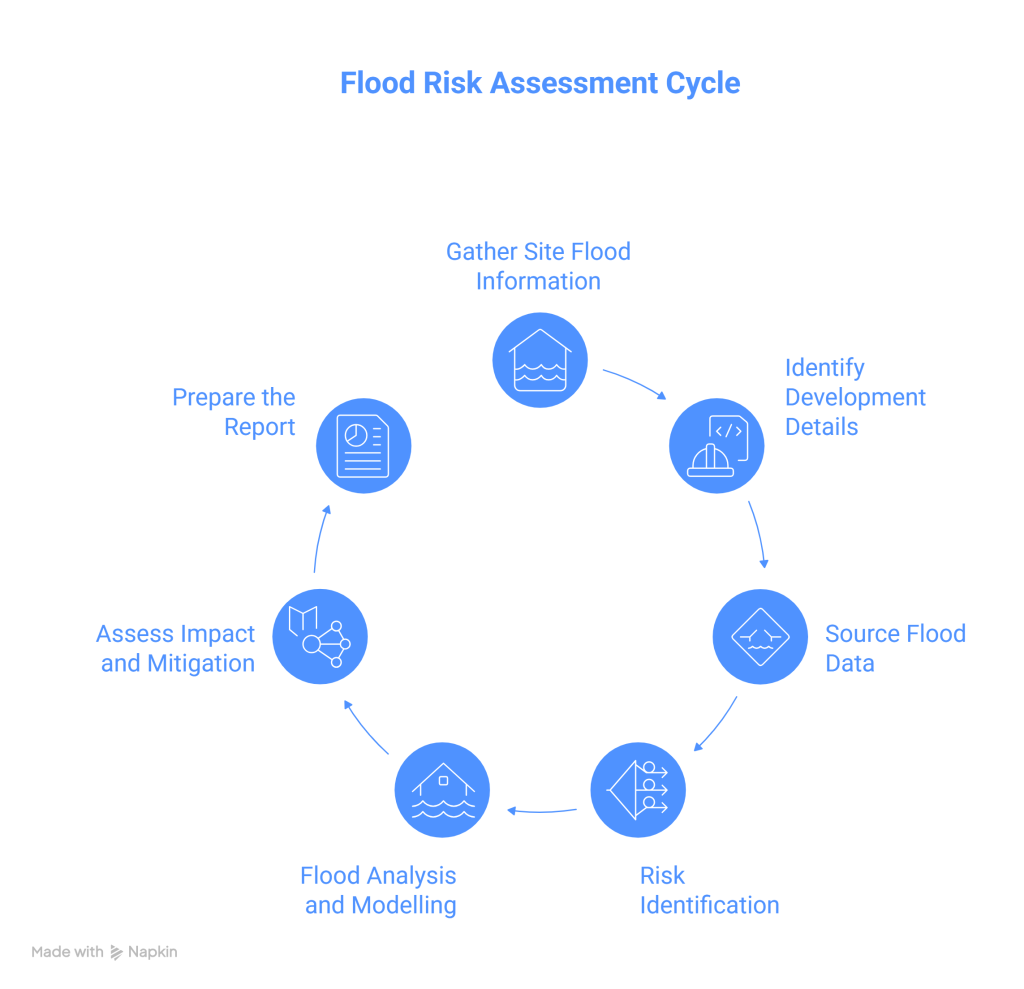
Our step-by-step process of conducting an FRA
- Gather Site Flood Information: We gather site flood information by using the Environmental Agency flood map for planning to identify your site’s flood zone and surface water risks.
- Identify Development Details: We then define the site’s layout, the use of the development and vulnerability classification.
- Source Flood Data: We obtain flood data from EA and climate change allowances. We also check for local flood records, including past groundwater levels and reservoir breach info.
- Risk Identification: We continue to list all the ways your site could flood. We also identify receptors and pathways ( how water will reach the development).
- Flood Analysis and Modelling: We then calculate flood extents and depths using past data and flood models. For river floods, we may build a 1D or 2D hydraulic model.
- Assess Impact and Mitigation: We then map out possible impacts and determine if the development is safe. We also recommend clear mitigation measures to protect the site for a lifetime, a national policy requirement for planning permission in a high-risk flood zone.
- Prepare the Report: We then create a structured report and document all findings with charts, pictures and explanations in plain English. Our reports are made compliant and easy to interpret.
Why choose RIDA Reports for Flood Risk Assessment?
RIDA Reports stands out as a flood risk consultant with chartered engineers and over 21 years of experience. We stay up to date with UK flood policy, climate allowances and latest modelling techniques.
We provide flood risk assessment for developments of any size, from a single home to major strategic developments of up to 50,000 square metres. In addition to flood risk assessment, we also offer drainage consultancy and strategies.
We offer the first FRA draft in 48 hours, helping clients meet planning deadlines. Our drainage strategies are completed in 5 days. Our fastest turnaround in the UK reduces delays and costs by addressing issues early and generating a complaint report that meets all planning requirements.
We also provide fixed -price packages, whether you need a simple flood risk appraisal or a full, detailed flood risk assessment. We also provide support services such as sequential tests, exception tests, evacuation plans, and more.
We regularly work with developers, planners, other flood risk consultants, home owners, architects, contractors and other officials to approach development in a safe and compliant manner. Our case studies can be found here.
- Our FRA will provide clear advice that:
- Satisfies and meets the local and national planning policies.
- Includes cost-effective mitigation strategies.
- Assess all sources of flooding with worst case seniors.
- Clear emergency entry and exit routes.
- Protects the neighbouring area from future flood risks.
RIDA Reports is the leading expert in flood risk assessments across the UK. We have decades of combined experience in FRAs and Drainage Strategies. We are here to provide compliant and structured services for homeowners, developers, contractors and investors.
If you have any other questions about FRA, or you want to know more about our services and rates, you can check our website or contact us for a free, no-obligation quote.