
Flood Risk Assessment Conservation Areas
Flood risk assessment conservation area is required when your development is in a designated historic place.RIDA Reports’ chartered engineers use the latest flood maps and advanced methodology to address flood hazards and protect the historic character of the conservaiton area.
In England, if you are developing or altering a property in a conservation area, you need careful planning:
- It must meet the general FRA requirements
- It must protect the heritage of the conservation area
We at RIDA Reports balance flood safety with conservation rules and design a compliant flood risk assessment report in 48 hours.

What are conservation areas in England?
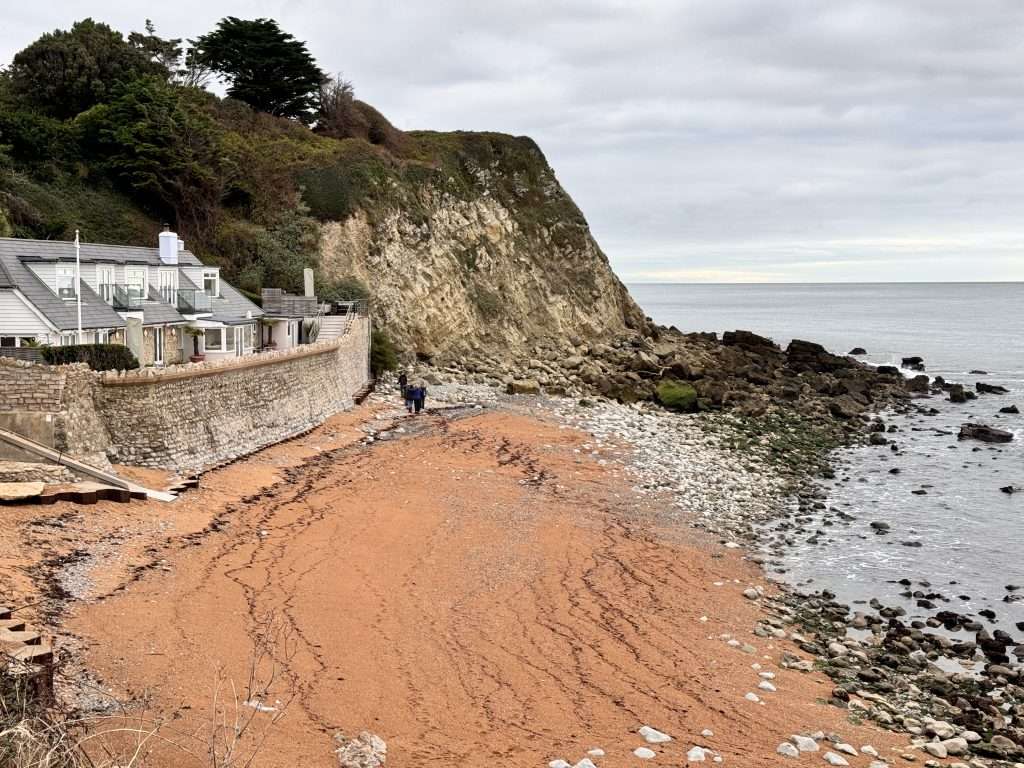
Conservation areas are historic places identified by local councils for special protection. By law, a conservation area must be a special architectural design or hold historic interest, and it deserves careful management.
In England, the first conservation areas were designated in 1967, and as of today, there are nearly 10,000 conservation areas across England. These conservation areas range from town centres, old villages, to historic suburbs and estates.
Our Clients





Planning permission and consent requirements in conservation areas
Any work in conservation areas requires an extra permission check. Which means, any development in a conservation area will require planning permission and possibly Listed Building or Conservation Area Consent, even for minor work
Councils even have the right to remove “ permitted development rights” in these zones, and even changing a facade will require permission. Flood risk is also one of the most important factors for conservation areas, and flood guidance explicitly advises developers to contact the LPA if the property is a listed building or a conservation area.
Any development in flood zone 2 or 3 (or in Zone 1 meeting size/critical drainage tests) requires a flood risk assessment. If your development is in a conservation area, it is always wiser to consult your Local Planning Authority early. There is a possibility that the council’s conservation officer might impose conditions, for example, requiring special building materials to preserve the historic look, etc.
Instead of facing refusals and delays with your planning, contact your LPA. You can also contact our Flood risk consultants and know more about the flood risk of your conservation area site and what service suits your project the best!
What Does a Flood Risk Assessment Cover in a Conservation Area?
A flood risk assessment is a technical report that demonstrates how your development will manage flooding and prevent the risk of flooding elsewhere. In the conservation area context, the FRA has to cover all standard elements with extra attention to heritage issues.
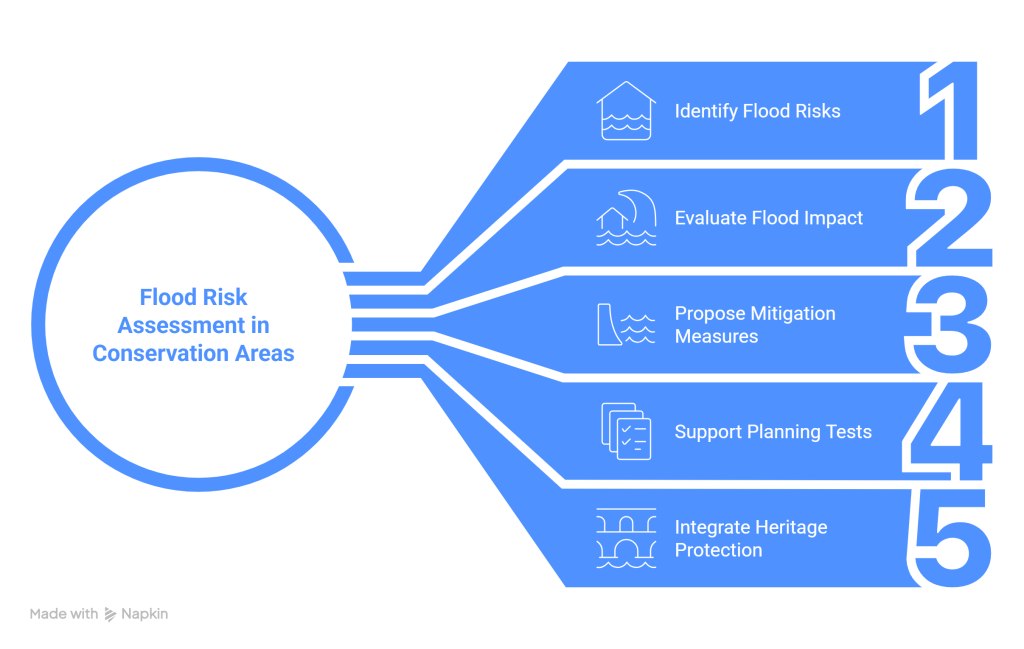
A flood risk assessment for a conservation area by RIDA Reports will:
- Identify flood risks by assessing all flood sources and performing flood modelling. We identify current and future flood hazards using the Environment Agency and local records.
- Evaluate the flood impact and confirm the development will not increase the risk of flooding elsewhere by using site-level analysis and flood modelling.
- Propose mitigation measures through engineering solutions that keep the water away from buildings and ensure safe drainage.
- Support planning tests, such as sequential and exception tests, as required to provide evidence to the Local Planning Authority.
- In a conservation setting, our FRA will also discuss how to integrate these proposed flood measures without damaging the historic factor. For example, using traditional-looking flood barriers or specifying lime plaster ( flood resilient and compatible with older buildings)
You can contact us and discuss your conservation-area project. Our consultants will guide you through the flood risk assessment requirements and provide you with a free, no-obligation quote.
Why Flood Risk Matters in Conservation Areas
Historic areas often consist of older buildings and infrastructure that can be vulnerable to flooding. For instance, traditional construction materials like lime mortar, old timbers or brickwork can be damaged by prolonged water exposure,
According to Historic England, about one in four heritage buildings is at risk of flooding an this number is expected to increase with climate change. Floodwater can undermine old foundations, warp structural timbers and even wash away traditional mortars.
An FRA by RIDA Reports help predict flood hazards and plan mitigation strategies. We can recommend the right flood-resistant material for your development and raise floor levels to ensure no water reaches the building or pools.
Start Your Conservation Area FRA the Right Way
Flood risk assessment triggers for conservation areas are mostly similar to normal triggers. Under national policy, an FRA is required for any new development that is any part of it that falls into higher risk zones or meets certain size or drainage criteria.
Key triggers include:
- Location in Flood Zone 2 or 3: A
- The development of 1 hectare or more in Flood Zone 1 (low risk) requires an FRA.
- Sites in Flood Zone 1 with known drainage issues
- Surface water risk
If any of the above triggers apply to your conservation area site , you must provide an FRA. If any of the above apply to your conservation-area site, you must provide an FRA. Even if you plan to just modify a historic building, and it falls in any of the above criteria, you will need an FRA.
Sometimes conservation area projects might voluntarily include FRAs, even if the site falls outside these triggers. It is always wise to consult your LPA or hire a flood risk consultant and understand the planning permission requirements in detail.
Our Flood Risk and Planning Services
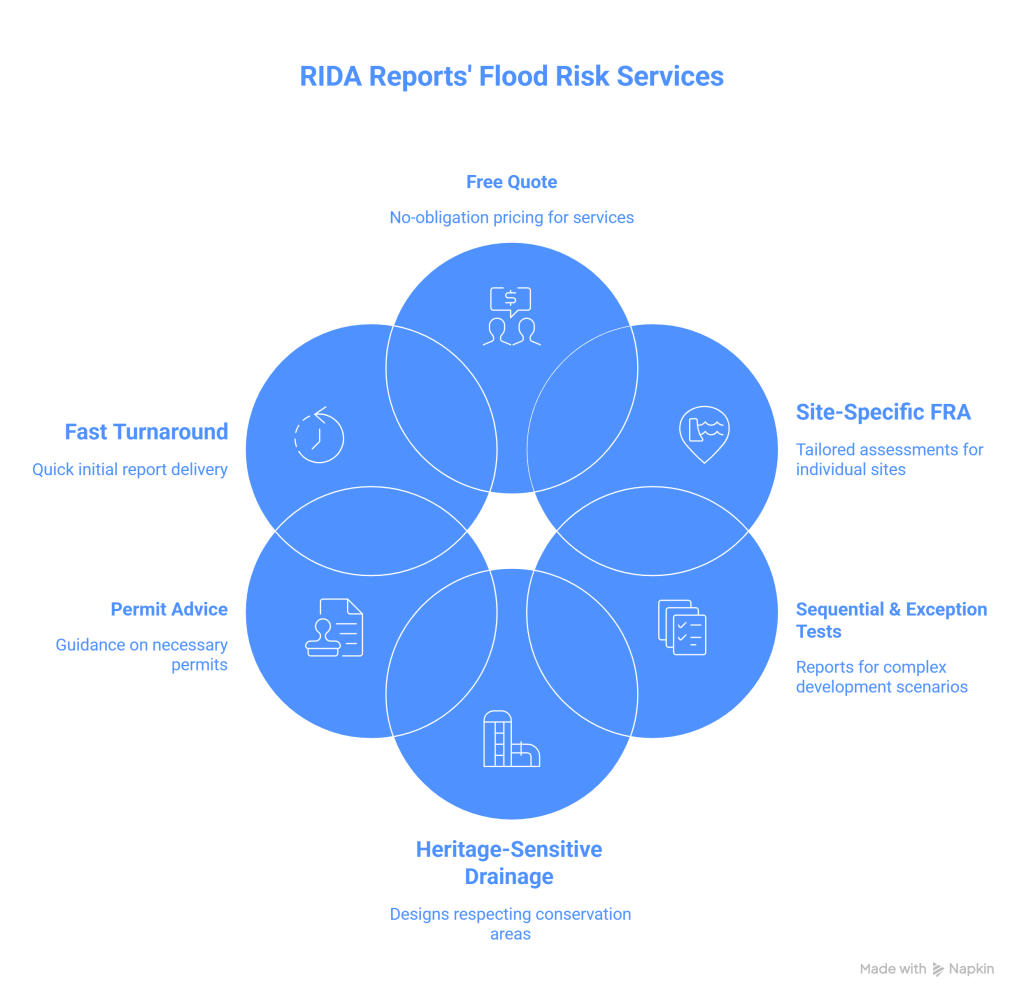
We specialise in flood risk work for all kinds of developments, including projects in sensitive areas. Our services include:
- Site-specific Flood Risk Assessments (FRA) tailored to your site conditions and meet all the Environment Agency and LPA checklist requirements.
- Sequential & Exception Test Reports when required.
- Heritage-sensitive Drainage Design that respects conservation constraints.
- Advice on Permits.
Fast Turnaround with the initial report in just 48 hours.
Contact us for a free, no-obligation quote on a flood risk assessment.
Flood Risk Assessment triggers for Conservation areas.
Flood risk assessment in conservation areas involves unique challenges. If you have more questions or need a personalised assessment, we are here to help.
Our team at RIDA Reports is ready to guide you through each ste, and generate a final report fully compliant with the national policy. Send us your site details for a free quotation.