
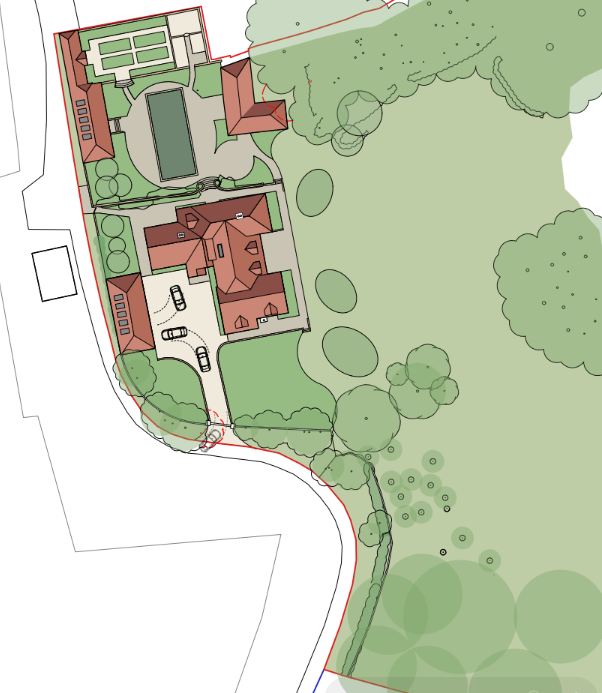
Hook Farm, Bosham Chichester
The Brief
RIDA Reports was appointed to undertake a detailed flood risk assessment for a proposed redevelopment at Hook Farm, located on Hook Lane in Bosham, Chichester. The project involves the construction of a new garage, an extension to the main holiday house, the conversion of adjacent units, and the relocation of an existing swimming pool. Classified as a ‘More Vulnerable’ development with an estimated design life of 50 to 100 years, a comprehensive evaluation was required to ensure the long-term safety and sustainability of the site.
Why the Client Chose RIDA
Situated within a high-risk tidal flood zone, the proposed development required specialist technical backing to support the planning application. The client engaged RIDA for our established expertise in navigating complex coastal flood risk constraints. They required a consultancy capable of delivering pragmatic mitigation strategies that would satisfy the stringent requirements of the National Planning Policy Framework (NPPF) without compromising the operational needs of the holiday home.
The Challenge
The site presented several significant environmental constraints, primarily driven by its proximity to the Fishbourne Channel—located just 75 metres away—which places the development within high-risk Flood Zone 3 for tidal flooding. The highest design flood level for the site was established at 5.1m AOD. In addition to the primary tidal threat, the assessment identified a medium risk of groundwater flooding. While the risk of surface water flooding was deemed low, a sustainable drainage strategy was still strictly required to manage local runoff and ensure the expanded building footprint would not exacerbate flood risks elsewhere.
The RIDA Difference
We conducted a detailed flood risk assessment in strict accordance with the NPPF. To directly address the tidal flood risk, we specified that the finished floor levels should be 5.4m AOD, confirming that the site’s existing finished floor level of 5.56m AOD already provides a safe freeboard above the 5.1m AOD design flood level. To mitigate the medium risk of groundwater flooding, we recommended the installation of a tanking membrane up to 300mm above ground level and the design of dedicated flow paths around the structures to safely direct emerging groundwater. For surface water management, we outlined a sustainable drainage (SuDS) strategy utilising infiltration devices and permeable surfaces to ensure no increase in post-development runoff rates. Furthermore, a temporary refuge was proposed on the first floor of the main house to provide safe shelter during sudden extreme events.
The Outcome
The assessment successfully demonstrated that the site’s flood risks could be actively and safely managed over its lifetime. By confirming that the tidal flooding mechanism required no off-site flood compensation and detailing clear, actionable structural mitigation measures, the report established full compliance with the NPPF. Coupled with the recommendation of a formal Flood Warning and Emergency Response Plan linked to the Environment Agency’s alert service, the report provided the comprehensive technical evidence needed to confidently support the planning application.