
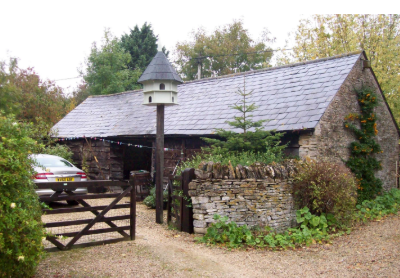
Cottars Barn, Dowington, Lechlade
The Brief
RIDA Reports was instructed to undertake a detailed flood risk assessment for a proposed development at Cottars Barn in Dowington, Lechlade. The project entails the conversion of an existing outbuilding to provide ancillary accommodation to the main dwelling, alongside external alterations and the installation of PV panels. As the site is located within Flood Zone 2, a robust assessment was required to evaluate flood risks, ensure no increase in off-site runoff, and establish sustainable water management measures.
Why the Client Chose RIDA
To navigate national planning policies and secure support for the barn conversion, the client sought specialist environmental planning expertise. RIDA was appointed for our established track record in delivering precise, compliant flood risk strategies tailored to the unique structural constraints and requirements of rural domestic conversions.
The Challenge
The site is situated within Environment Agency Flood Zone 2, denoting a medium probability of fluvial flooding from a nearby tributary of the River Thames. Furthermore, British Geological Survey data and flood hazard assessments indicated a high susceptibility to groundwater flooding. A critical site-specific constraint was the inability to raise the Finished Floor Level (FFL) to the standard recommended freeboard height due to existing access and structural limitations inherent to the historic outbuilding.
The RIDA Difference
RIDA delivered a comprehensive assessment to demonstrate full compliance with the National Planning Policy Framework (NPPF). To address the impossibility of achieving standard FFL clearances against the high groundwater risk, we developed a targeted ‘water exclusion strategy’. We recommended raising ground floor thresholds, applying a tanking membrane above ground level, and establishing external flow paths for groundwater emergence. Additionally, we specified the use of flood-resilient materials, such as engineering bricks and resistant mortars, and mandated that all new essential services and fittings be appropriately elevated and properly sealed.
The Outcome
The detailed flood risk assessment successfully demonstrated that the barn conversion would remain safe for its design life without increasing flood risk elsewhere, particularly as surface water runoff would remain at a very low risk. By providing an evidence-based mitigation strategy and outlining a clear safe egress route alongside a recommendation for the occupants to register for the Environment Agency Flood Alert service, the report comprehensively satisfied the requirements of the local planning authority.