
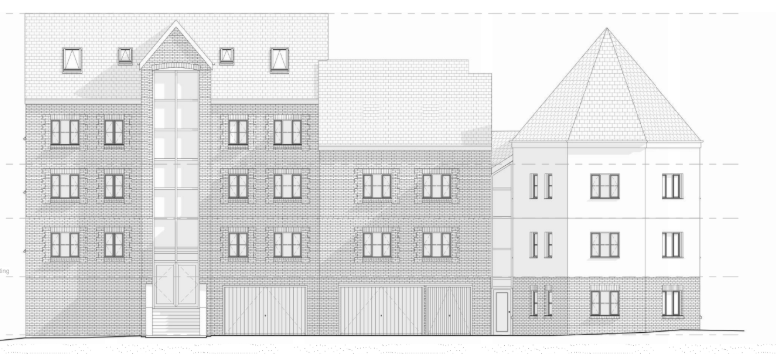
River Meadows Exeter
The Brief
RIDA Reports was appointed to provide a detailed flood risk assessment for a development at River Meadows in Exeter. The proposed project involves the change of use of the ground floor of an existing apartment building, converting a storage area into a new dwelling, alongside the re-accommodation of the second floor.
Why the Client Chose RIDA
Given the property’s location adjacent to the Exeter Ship Canal and its position within a high-risk flood zone, the client required specialist expertise to navigate strict planning constraints. RIDA was chosen to deliver a robust assessment that would ensure the change of use complied with the National Planning Policy Framework (NPPF), adequately address the required Exception Test, and outline practical flood resilience measures.
The Challenge
The primary constraint for the site is its location within Flood Zone 3, which indicates a high probability of fluvial and tidal flooding. A significant challenge was that precise flood level data was unavailable during the initial assessment, necessitating a conservative assumption of flood depths up to 600mm above existing ground levels, including a 46% climate change allowance. Because the change of use upgraded the ground floor to a ‘More vulnerable’ classification, the development was required to pass the NPPF Exception Test. Conversely, the risks from surface water, groundwater, and sewer flooding were assessed as very low.
The RIDA Difference
RIDA conducted a detailed flood risk assessment to evaluate all potential flooding mechanisms and formulate a compliant mitigation strategy. To address the high fluvial and tidal flood risk alongside the assumed 600mm water depth, we specified a tailored approach: a ‘water exclusion strategy’ for flood depths up to 300mm, and a ‘water entry strategy’ to allow water through the property to avoid structural damage at higher depths. We recommended incorporating highly flood-resilient construction materials, such as engineering bricks, closed-cell insulation, and suspended concrete floor slabs. Additionally, we mandated that all electrical services and meters be placed above the predicted flood level and outlined a safe evacuation route for residents. We also established that surface water run-off should be managed using Sustainable Drainage Systems (SuDS) to ensure no increase in discharge rates.
The Outcome
The comprehensive assessment successfully demonstrated that the development passes the Exception Test by providing wider sustainability benefits through local regeneration and the provision of new housing. The report provided robust evidence that, with the recommended flood resilience measures and a formal Flood Warning and Emergency Response Plan in place, the dwellings will be safe for their 50 to 100-year design life without increasing flood risk elsewhere, effectively supporting the planning application.