
Derwent Avenue
The Brief
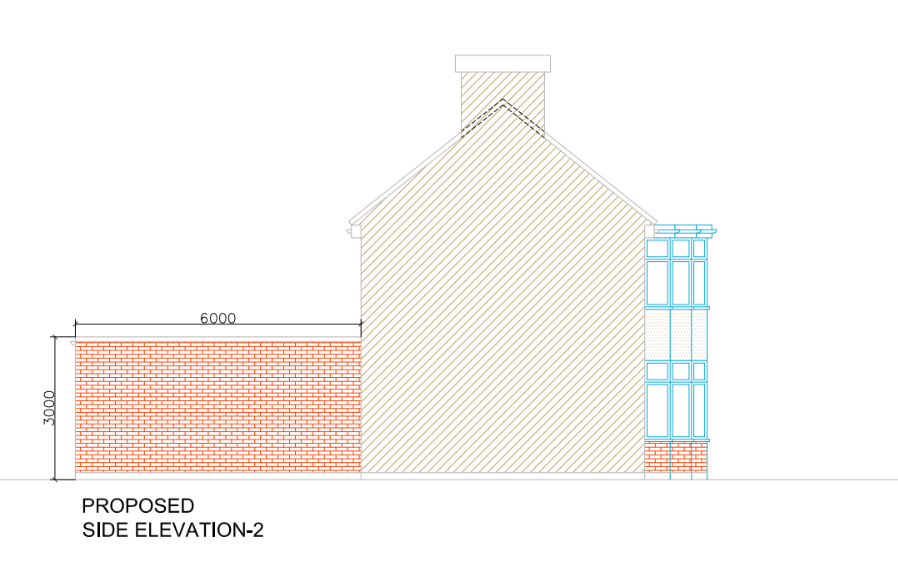
RIDA Reports Ltd was appointed to undertake a detailed flood risk assessment for a proposed residential development at 48 Derwent Avenue, Ickenham, Uxbridge (UB10 8HL). The project involves the construction of a residential extension to the existing dwelling, along with associated internal modifications across the ground and first floors.
Why the Client Chose RIDA
Securing planning permission for residential extensions located near active river catchments requires specialist knowledge to satisfy Environment Agency and local council policies. The client required a consultancy capable of delivering a precise, site-specific flood risk evaluation and a sustainable drainage strategy. RIDA was selected for its proven ability to provide the robust technical evidence necessary to seamlessly support household planning applications.
The Challenge
The primary constraint for the site was its location within an area of elevated fluvial flood risk (spanning Environment Agency Flood Zones 2 and 3), indicating a medium to high probability of river flooding. Furthermore, while the site faced a low risk of groundwater and sewer flooding, the assessment identified a residual risk of localised surface water ponding. The core challenge was to demonstrate that the new extension could safely mitigate these fluvial and surface water risks over its lifetime without displacing water or disrupting existing overland flow paths.
The RIDA Difference
RIDA conducted a detailed flood risk assessment, meticulously evaluating the site against Environment Agency data, local planning guidelines, and modelled flood levels. To mitigate the identified fluvial and surface water flood risks, RIDA formulated a robust water avoidance strategy. The team verified that the finished floor level (FFL) of the new extension would be set to match the existing building’s ground levels, confirming this elevation sits safely 400mm above the baseline and entirely outside of the modelled flood extents. To directly address the residual risk of surface water ponding, RIDA advised increasing threshold levels to safely divert runoff paths and outlined a site-specific Sustainable Drainage Systems (SuDS) strategy to attenuate flows and replicate the natural drainage regime.
The Outcome
The detailed assessment successfully demonstrated that the proposed residential extension could be safely accommodated at the site. By linking the fluvial and surface water risks directly to the elevated floor levels and the implementation of SuDS techniques, RIDA confirmed the development will remain safe over its design life and will not increase flood risk elsewhere. The comprehensive report provided the National Planning Policy Framework (NPPF) compliant technical justification required to fully support the client’s planning application.