1 Water Eaton Road, Oxford
The Brief
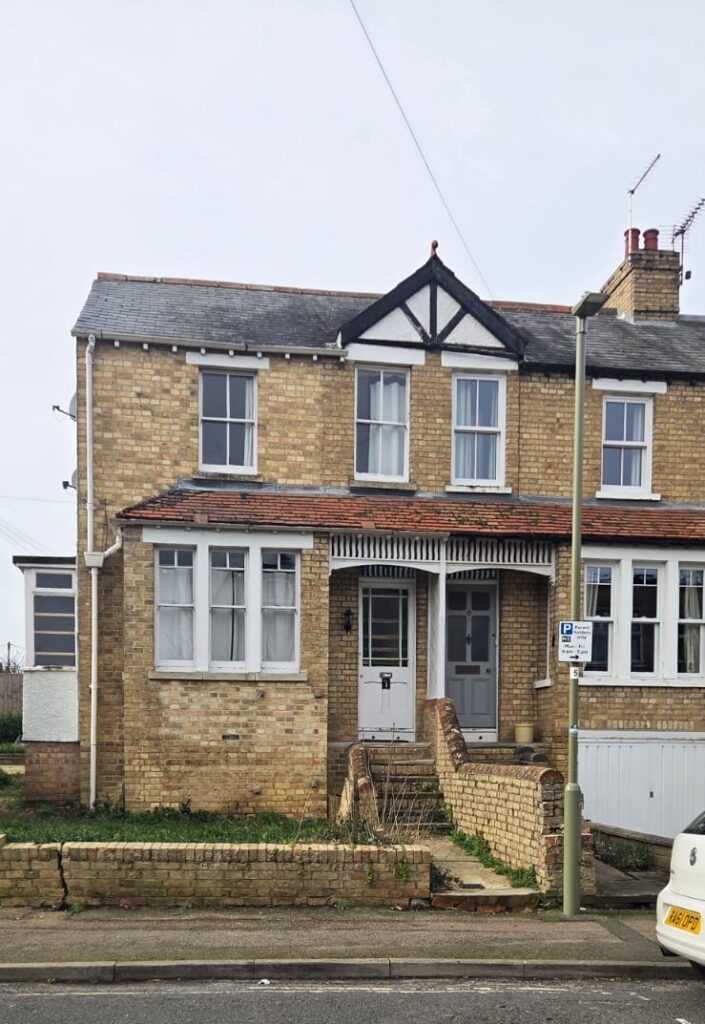
RIDA was appointed to undertake a detailed groundwater and flood risk assessment for a proposed residential development at 1 Water Eaton Road, Oxford. The project involves extending an existing half-basement to accommodate a full-height basement room, requiring an excavation depth of up to 3.00m without increasing the overall footprint of the end-of-terrace dwelling. The primary objective was to evaluate fluvial, surface water, and hydrogeological risks to demonstrate that the expanded basement would be safe for its lifetime.
Why the Client Chose RIDA
The project required specialised technical support to navigate specific local planning conditions, which mandated a hydrogeological impact assessment to ensure the basement would not adversely affect surrounding groundwater flows or neighbouring structures. The client engaged RIDA for our proven expertise in evaluating complex subsurface developments and delivering site-specific compliance strategies.
The Challenge
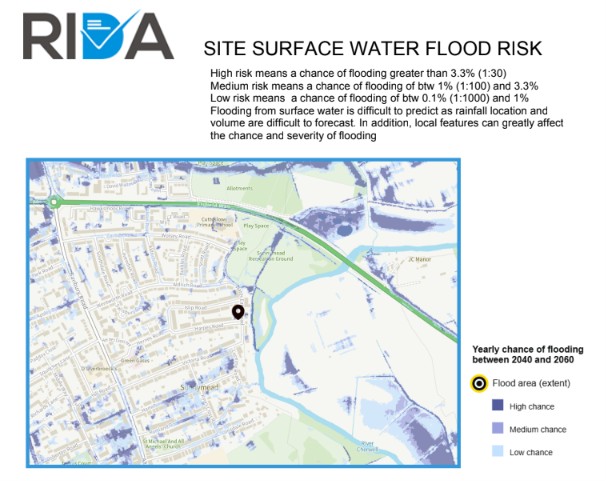
Situated in fluvial Flood Zone 2, the site presented a medium probability of river flooding. A primary concern for the local council was the potential hydrogeological impact of the new basement excavation on local groundwater behaviour. Furthermore, the property is located within a designated Critical Drainage Area (CDA), meaning local planning policy dictates that any new development must actively manage and reduce downstream surface water flood risks.
The RIDA Difference
Our team conducted a comprehensive assessment incorporating site-specific geotechnical investigations, which confirmed the absence of groundwater up to six metres below ground level. Because the proposed basement floor level (1.28m below ground level) would not intercept existing groundwater, the risk of altering subterranean flows was deemed very low. To manage residual risks, we recommended implementing a robust 3-barrier tanking system for the basement to protect against any temporary, storm-induced groundwater ingress. To address the CDA requirements, we detailed a surface water management strategy featuring a linear drainage channel within the new lightwell, which connects to the existing network via a package pumping station, alongside broader recommendations for Sustainable Drainage Systems (SuDS).
The Outcome
The detailed assessment successfully demonstrated that the proposed basement extension could be constructed safely without adversely affecting local groundwater flows or increasing flood risk elsewhere. By providing a clear, NPPF-compliant strategy for water exclusion and sustainable surface water management, the report effectively supported the planning application and directly addressed the local authority’s stringent hydrogeological conditions.