Land at Blandys Lane, Upper Basildon
The Brief
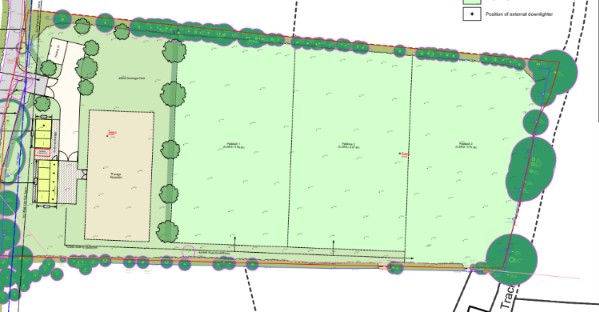
The project involves the construction of new stables, store buildings, and an equestrian manege on an 11,400 sqm parcel of open farmland at Blandys Lane, Upper Basildon. The proposed scheme is classified as a ‘water compatible’ development with an estimated lifespan of 50 to 100 years.
Why the Client Chose RIDA
Because the proposed development site exceeds one hectare in size, national planning policy mandates a site-specific flood risk assessment. The client required our expertise to demonstrate compliance with the NPPF and provide a sustainable surface water management strategy to support their planning application.
The Challenge
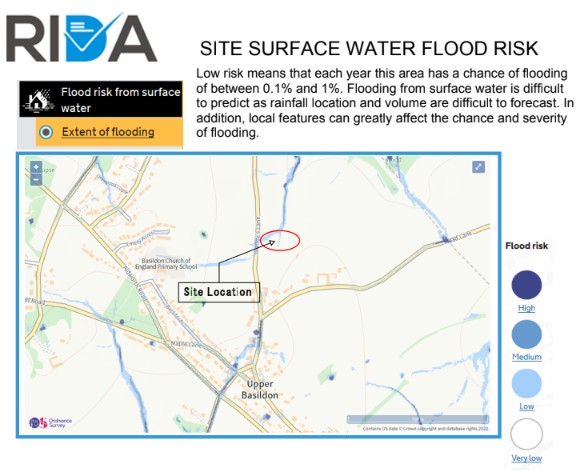
The site is situated in Flood Zone 1, meaning it has a low risk of fluvial flooding, with the River Thames located approximately 2,400 metres away. While groundwater levels are unknown, the site sits above a principal aquifer and Seaford Chalk bedrock, requiring careful consideration. The primary challenge was managing the risk of surface water flooding; ensuring the expansive 1.14-hectare development would not increase surface water run-off and create off-site flood impacts was a critical planning constraint.
The RIDA Difference
We conducted a detailed flood risk assessment to evaluate all sources of flooding in accordance with the NPPF. To mitigate the surface water risk and safely manage run-off over the principal aquifer, we developed a Sustainable Drainage Systems (SuDS) strategy tailored to the local geology (chalk, sand, and gravel). We recommended incorporating infiltration devices, filter drains, and permeable surfaces to safely accommodate the attenuation volume and replicate the existing natural drainage regime. We also developed a residual risk strategy confirming safe egress from the site via Blandys Lane, which is beyond the extent of flooding.
The Outcome
The assessment successfully demonstrated that the equestrian development is safe from flooding and will not increase flood risk elsewhere. By establishing a clear surface water management plan that ensures no increase in the rate of surface water discharge, the report provided the necessary evidence to support the client’s planning application and fulfill all local and national requirements.