Shepherd Huts Runners Post
The Brief
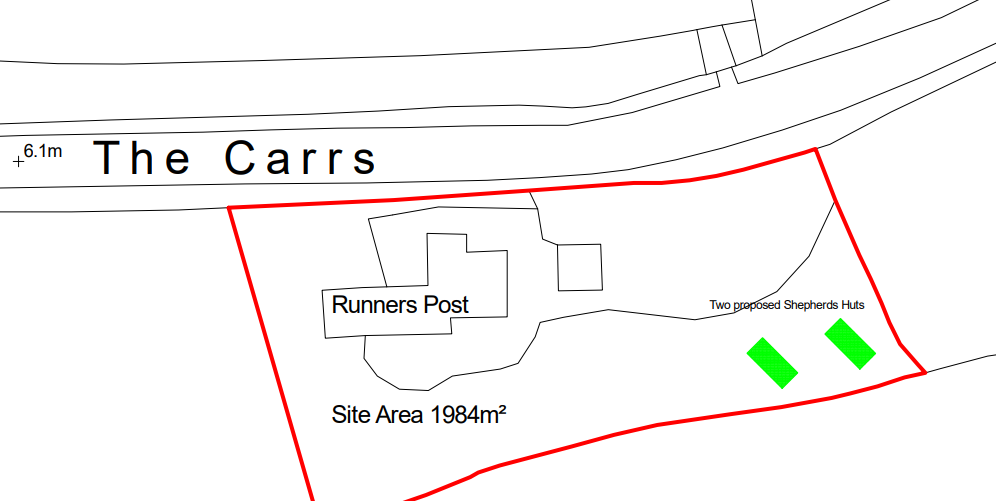
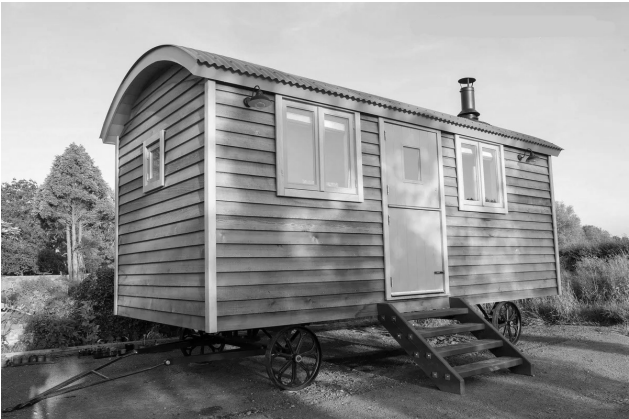
RIDA Reports was appointed to undertake a detailed flood risk assessment for a proposed accommodation development at Runners Post, located on The Carrs in Whitby. The project involves the installation of two temporary shepherd huts within the grounds of an existing bed and breakfast. Classified as a ‘More Vulnerable’ development, a comprehensive evaluation was required to ensure the safety of future occupants and the resilience of the new structures.
Why the Client Chose RIDA
Situated within a high-risk flood zone adjacent to a main river, the proposed accommodation required robust technical evidence to satisfy stringent local planning requirements. The client engaged RIDA for our specialist expertise in navigating complex fluvial constraints and our proven ability to deliver practical, site-specific mitigation strategies necessary to successfully demonstrate compliance with the Exception Test.
The Challenge
The site presented significant environmental constraints, primarily driven by its location just five metres from the River Esk, placing the development area squarely within high-risk fluvial Flood Zone 3. Alongside the primary fluvial threat, the assessment identified a medium risk of surface water flooding, with a likely residual risk of localised deep ponding. Consequently, national planning policy dictated that the development must successfully pass the Exception Test, proving that the vulnerable accommodation could be made safe for its lifetime without increasing flood risk elsewhere.
The RIDA Difference
We conducted a detailed flood risk assessment in strict accordance with the National Planning Policy Framework (NPPF) to directly address the site’s specific vulnerabilities. To mitigate the high fluvial and medium surface water risks, we specified raising the finished floor levels of the temporary huts 700mm above the existing ground level. We developed a tailored resilience strategy, ensuring that concrete foundations would not obstruct water movement beneath the wheels of the huts. Furthermore, we recommended using flood-resilient materials, raising all services and electrical fittings above the design flood level, and utilising closed-cell insulation for any lower pipework. To protect future occupants, we identified a safe evacuation route along the B1410 towards Briggswath and advised the implementation of a formal Flood Management and Evacuation Plan linked to the Environment Agency’s active alert service.
The Outcome
The assessment successfully demonstrated that the proposed temporary accommodation could be actively and safely managed over its operational lifetime without exacerbating flood conditions in the surrounding area. By combining elevated floor levels, resilient design features, and clear evacuation protocols, the report provided the comprehensive technical documentation necessary to satisfy the Exception Test and confidently support the client’s planning application.